.png)
.png)
_edited.png)
.png)
.png)
.png)


TEN REASONS WHY I LOVE THE CATHOLIC CHURCH | KAIROS GLOBAL | SEPTEMBER 2021
- smithask2009
- 1 day ago
- 8 min read
Author: George Paul
Intro: George Paul shares succinctly and beautifully ten reasons for his love of the Catholic Church.
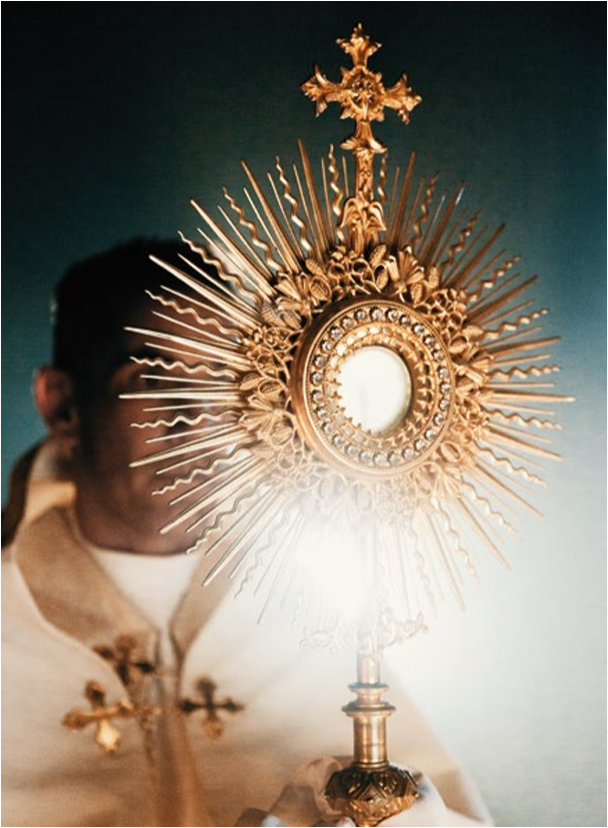
1. TruthIn an essay describing his conversion to Catholicism, G.K. Chesterton wrote, ‘The difficulty of explaining “why I am a Catholic” is that there are ten thousand reasons all amounting to one reason: that Catholicism is true.’ When our Lord entrusted the keys of His Church to St Peter, that included the deposit of faith, the Church’s possession of unchangeable truth: what God has revealed through his prophets in the Old Law and through his Divine Son in the New Law. The Catholic faith seeks the truth about all matters in the light of our divine faith. Being open to ideas from every quarter that seeks the truth, including science, psychology, literature, sociology, theology and philosophy, the Church’s view of mankind has an unsurpassed intellectual depth, thoroughness, consistency, and integrity. As I began to understand the richness of this truth, it changed my world view and my understanding of everything else. It gave me direction and helped me to make sense of the big questions regarding the meaning and purpose of human life, the cosmos and everything in it.2. GoodnessThroughout its history, the Church has served as a beacon of goodness and charity in every part of the world. In fact, the Church has been the world's biggest charitable organisation for a very long time. Jesus cured the sick, cleansed lepers, made cripples walk and the blind see. He fed the hungry, thousands of them. And so did his apostles and the generations of Christians that followed them. The Catholic Church’s institutional apostolate for the sick gave rise to the gradual development of a more systematic nursing and medical care that we see today. From Fr Damien to St Mother Teresa, there is no dearth of concrete examples of heroic charity in the Church and they never cease to inspire us to go the extra mile in serving our brethren.3. BeautyBishop Robert Barron often talks about the aesthetic approach to evangelising. He writes, ‘I might suggest that the evangelist start with the Sainte Chapelle or the life of St Francis of Assisi or the Little Flower’s Story of a Soul or Thomas Merton’s Seven Storey Mountain or Gregorian chant, or perhaps best of all, a carefully executed liturgy of the Roman rite’, and I couldn't agree more! Many a time, I have stood awestruck at the resplendence of the Church in her liturgy, art, music, architecture, saints, monasteries and literature. Besides, her beauty is founded on the truth and that gives it a timeless, eternal character that the secular world is devoid of. According to Dr Peter Kreeft, professor of philosophy at Boston College and a prolific author, ‘the most beautiful thing in the world is a saint. Mother Teresa’s wrinkles are far more beautiful than a movie star’s vain, shallow, and bratty face.’4. The Holy EucharistThe Catechism of the Catholic Church (1324-1327), states that ‘The Eucharist is “the source and summit” of the Christian life. It is the culmination both of God's action sanctifying the world in Christ and of the worship men offer to Christ and through him to the Father in the Holy Spirit.’ I'm yet to meet a faithful Catholic who is not Eucharist-centred. One of the most inspiring stories is that of Dr Scott Hahn, who was still a Presbyterian minister when he attended his first Catholic Mass in a basement chapel. Captivated by the liturgy of the Word, the prayers soaked with Biblical language, and above all the liturgy of the Eucharist, it did not take long for him to convert to Catholicism in 1986 and since then he has been an ardent defender of the Faith and one of its most passionate promoters. Even though veiled by our mode of existence, the Eucharist is a real participation in heavenly worship and there is no place on earth where heaven is so accessible. I've been fed, healed, instructed and energised by the Mass and the real presence of the Lord in the Blessed Sacrament.
5. The Sacrament of ReconciliationThere is no rosy Way of the Cross. I'm responsible for my choices in life and confession serves as a constant reminder of the ongoing spiritual battle I'm waging against my own sinful inclinations and ignorance. Besides, it is a tangible sign of God's merciful forgiveness in the face of our iniquities. Every time I kneel before the priest, the Lord is ready to forgive and forget my past. Sin is never committed in isolation. The Catechism of the Catholic Church (1422) states: ‘Those who approach the sacrament of Penance obtain pardon from God’s mercy for the offence committed against him, and are, at the same time, reconciled with the Church which they have wounded by their sins and which by charity, by example, and by prayer labours for their conversion.’ We are intimately connected to one another, which is why the sacrament reconciles us with God and it reconciles us with the Body of Christ. The sacrament of Penance is seen as a joint work of the Church through the minister and the person who confesses. Confession demands a firm determination of the will to correct my wrongs and to stay away from sin in the future. The graces bestowed upon us through the sacrament strengthens us to fight the good fight.
6. Papacy
In a tribute to St John Paul II, the editorial published in The New York Times on April 2, 2005, pointed out, ‘The papacy is a unique instrument of human governance. No other institution combines spiritual and political authority in quite the same way and with the same global reach, and no other can claim a continuous history stretching back to antiquity.’ I consider it a great blessing to have come of age during the JP II years. As the head of the Church, his words, actions and writings always served as a guiding light to the Church as well as the world in a time of darkness and confusion. Although different in their leadership style, Pope Benedict XVI and Pope Francis have continued the work of articulating the Christian faith, inspiring and challenging us in our Christian life. You are Peter, and upon this rock I will build my church. I will give to you the keys of the kingdom of heaven (Matthew 16:18). These words continue to ring true in the Catholic Church through the Petrine Office. The Chair of Peter is the visible source and foundation of unity of faith and communion in the Church. As the Vicar of Christ, the Pope is a living symbol of the Lord's salvific mission continuing in this world via his apostolic ministry and emphasises the fact that God chose us as his friends and co-workers!
7. The Bible‘To fail to appreciate the role that the Catholic Church played—and plays—with respect to the Bible,’ says apologist Jimmy Akin, ‘is to fundamentally misunderstand the Bible.’ The Bible is a precious and irreplaceable resource that speaks to the core of our faith. Nonetheless, God chose to give the Church not only the written Gospel but also the spoken one. Both of these are complementary and have been passed down under the protection of the Church. Dei Verbum states, ‘This sacred tradition, therefore, and Sacred Scripture of both the Old and New Testaments are like a mirror in which the pilgrim Church on earth looks at God, from whom she has received everything until she is brought finally to see Him as He is, face to face’ (DV, 7). Throughout the ages, the Church has kept the principle it utilised from the time of the apostles: Scripture, Tradition and Magisterium are inseparable. Reading and understanding the Scriptures with a Catholic lens, in the light of Tradition and the Magisterium, has helped me tremendously in learning the faith as the apostles and fathers taught it.8. Religious LifeThe Catholic religious life has its beginnings in the 3rd century when the ancient hermits of Egypt left their homes and went off to the desert to lead a solitary life of prayer. Soon afterwards, Pachomius the Great founded the first cenobitic communities in which male or female monastics lived together and held their property in common under the leadership of an abbot or abbess. In 516, Saint Benedict wrote his Rule of Saint Benedict as a practical guide for monastic community life, and its message spread to monasteries throughout Europe. Monasteries became major conduits of civilisation, preserving craft and artistic skills while maintaining an intellectual culture within their schools, scriptoria, and libraries. They functioned as centres for spiritual life as well as for agriculture, economy, and production. The later religious orders also made significant contributions to the Church and society in every part of the world. A religious sister or priest is a unique sign of Christ, wholly consecrated to God and His Church, as ministers of worship and service; in the world, healing, teaching and nurturing, but never of this world, they remain citizens and harbingers of another kingdom. In the words of Pope Emeritus Benedict XVI, ‘Monasteries are true and proper oases of the spirit in which God speaks to humanity.’
9. FamilyAccording to Catholic doctrine, marriage is not only a human or secular relationship, but also a sacrament and a sanctified state of life. The Catholic Church has always stood firm in asserting the truth about marriage and family in God's plan, in the face of the great challenges posed by secular ideologies and state regulations. Through the Apostolic Exhortation, Familiaris Consortio, and the Theology of the Body series, St John Paul II presents his vision of marriage and family in the current socio-cultural context. He was confident that no ideology, however daunting, could extinguish what God has set in motion. While the family finds itself in the midst of an eroding cultural crisis, facing militant attempts to redefine marriage contrary to reason and the Gospel of Jesus Christ, John Paul II redirects our gaze to the truth of Christian marriage as a fruit of the redemption of Christ. He saw the family in its full potential in the order of grace—that if lived according to this potential in Christ, could change the culture and the world. For the Church, the family is an active and vital agent in establishing a civilization of love and the renewal of Christian culture. This is a uniquely Catholic conception that has revolutionised every society that has been influenced by it.
10. TheologyCatholic theology is an extraordinary synthesis of human reason with divine revelation and a tremendous gift for the intellectual mind. The Church teaches that true faith and correct reason can and must work together, and viewed properly, can never be in conflict with one another, as both have their origin in God, as stated in the Papal encyclical letter issued by Pope John Paul II, Fides et ratio. St Anselm has aptly defined theology as ‘faith seeking understanding’. The early Church did not hesitate to absorb what is good and true in Greek philosophy and in the process, made it a handmaid of Theology. St Justin, St Augustine and St Thomas Aquinas held that whatever there was of Truth in the writings of Greek philosophers should be taken from them and adapted to the teaching of the true religion. This gave us a new way of talking about the faith, God's revelation expounded and expressed in philosophical language. As Boethius has written about the consolation of philosophy, I've found immense joy and comfort in the theological writings of the great Catholic intellectuals. As one of the oldest and unbroken intellectual traditions in the world, Catholic Theology continues to nourish the Church by offering new insights on the Word of God as well as by answering questions posed by the dominant culture and other disciplines of knowledge.
George Paul is a Communication Designer currently working with the Catholic Health Association of India. An avid student of Theology, Philosophy and History, George is still active in JY, helping youngsters connect with the Catholic intellectual tradition.


Comments