.png)
.png)
_edited.png)
.png)
.png)
.png)


SCIENTIFIC CATHOLICS | KAIROS GLOBAL | APRIL 2021
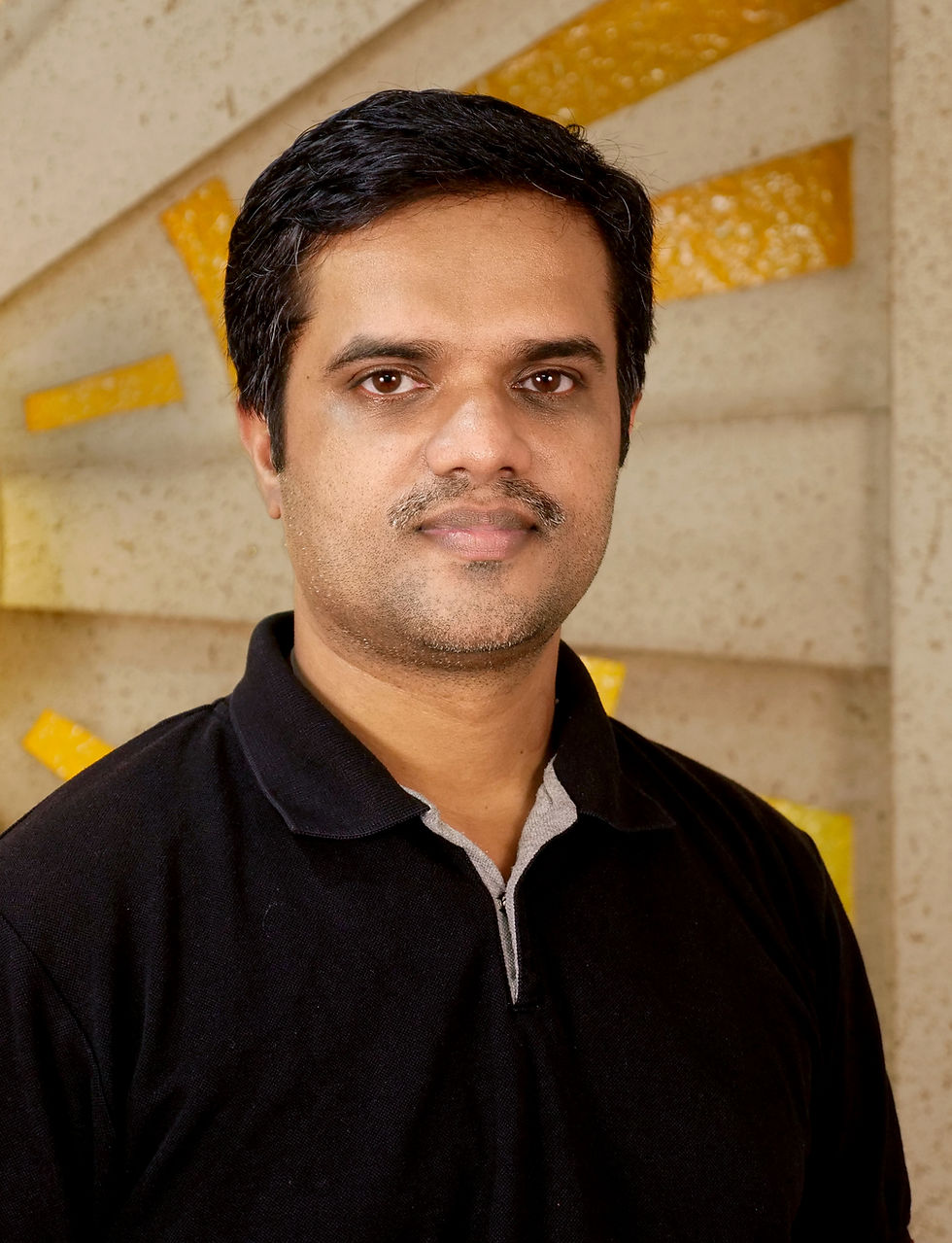
Author: Antony Sachin VR
Intro: Antony Sachin lists the Catholic pioneers across various fields of science.
St. Anatolius of Laodicea (early 3rd century–283 AD), became Bishop of Laodicea on the Mediterranean coast of Roman Syria in AD 268. He was one of the foremost scholars of his day in the physical sciences and in Aristotelian philosophy, as well as a great computist. According to Eusebius of Caesarea, he was credited with a rich knowledge of arithmetic, geometry, physics, rhetoric, dialectic, and astronomy. Anatolius is considered a saint by both the Eastern Orthodox and the Roman Catholic Church.
John Philoponus (490–570 AD) was a Byzantine Alexandrian philologist, scientist, Aristotelian commentator and Christian theologian. John Philoponus broke from the Aristotelian–Neoplatonic tradition, questioning methodology and eventually leading to empiricism in the natural sciences. He was one of the first to propose a ‘theory of impetus’ similar to the modern concept of inertia over Aristotelian dynamics.
St. Isidore of Seville (560–636 AD) was a Spanish scholar and Bishop. For over three decades, he was Archbishop of Seville. He is widely regarded, in the words of 19th-century historian Montalembert, as ‘the last scholar of the ancient world.’ Isidore was the first Christian writer to try to compile a summa of universal knowledge, in his most important work, the Etymologiae. This encyclopedia consists of 448 chapters in 20 volumes. He also invented the period (full stop), comma, and colon.
Paul of Aegina (625–690 AD), considered by some to be the greatest Christian Byzantine surgeon, developed many novel surgical techniques and authored the medical encyclopaedia, Medical Compendium in Seven Books. The book on surgery in particular was a definitive treatise in Europe and the Islamic world for hundreds of years.
St. Bede, the Venerable (672–7–5 AD) An Anglo-Saxon priest, historian, biblical scholar, and one of the greatest of all chroniclers of the Middle Ages. Aside from his historical writings, he was the author of On Time and On the Reckoning of Time.
Hunayn ibn Ishaq (808–873) was an influential Nestorian Christian translator, scholar, physician, and scientist from Al-Hirah (present day Iraq). He is the father of Arab translations. He mastered four languages: Arabic, Syriac, Greek and Persian. Hunayn is important for the many excellent translations of Greek texts which he made into Arabic. In particular he translated Plato and Aristotle. These translations were spread widely through Mesopotamia, Syria and Egypt.
Pope Sylvester II (946–1003 AD) was a French-born scholar and teacher who served as the bishop of Rome and ruled the Papal States from 999 to his death. He endorsed and promoted study of Arab and Greco-Roman arithmetic, mathematics, and astronomy, reintroducing to Europe the abacus and armillary sphere, which had been lost to Latin Europe since the end of the Greco-Roman era. He is said to be the first to introduce in Europe the decimal numeral system using the Hindu–Arabic numeral system.
Bishop Robert Grosseteste (1168–1253) was educated at Oxford University. He became Chancellor of Oxford University in 1215 remaining in this post until about 1221. He became Bishop of Lincoln in 1235. Grosseteste worked on geometry, optics and astronomy. In optics he experimented with mirrors and with lenses. He believed that experimentation must be used to verify a theory by testing its consequences. In his work De Iride he writes:
This part of optics, when well understood, shows us how we may make things a very long distance off appear as if placed very close, and large near things appear very small, and how we may make small things placed at a distance appear any size we want, so that it may be possible for us to read the smallest letters at incredible distances, or to count sand, or seed, or any sort of minute objects.
Pope John XXI (1210–1277 AD) was born in Lisbon, educated at the University of Paris (1228–1235), where he received his master’s degree (1240), John taught medicine at the new University of Siena, Italy. He was also author of an influential work on medicine prior to his papal election.
St. Albert the Great (1200–1280 AD) was a German Catholic Dominican friar, teacher, preacher, scientist, administrator and bishop. He made contributions to logic, psychology, metaphysics, meteorology, mineralogy, and zoology. Albert's knowledge of natural science was considerable and for the age remarkably accurate. His industry in every department was great: not only did he produce commentaries and paraphrases of the entire Aristotelian corpus, including his scientific works, but Albert also added to and improved upon them. His books on topics like botany, zoology, and minerals included information from ancient sources, but also results of his own empirical investigations.
Fr. Roger Bacon (1214–1292 AD) was an English Franciscan friar, philosopher, scientist and a forerunner of modern scientific method. He studied and later taught at Oxford University and also taught the University of Paris. Bacon had a wide range of interests. He investigated optics and the refraction of light through lenses, leading to the development of spectacles. He sought reform of the calendar and was interested in astronomy. In 1266, at the request of Pope Clement IV, he collected many of his observations in his Opus Maius, an encyclopaedia of all science. A new international society for the study of Roger Bacon, The Roger Bacon Research Society has recently been established.
The strongest arguments prove nothing so long as the conclusions are not verified by experience. Experimental science is the queen of sciences and the goal of all speculation.– Opus Tertium, Roger Bacon
Bishop Thomas Bradwardine (1300–1349 AD) was an Archbishop of Canterbury before his death. He was part of a group of thinkers called the ‘Oxford Calculators’ or ‘Merton Calculators,’ who made significant advances in the mathematical analysis of motion. One of them, William Heytesbury, was the first person to prove the ‘mean speed theorem’ (or ‘Merton Theorem’) which gives the distance travelled by a uniformly accelerating body.
Jean Buridan (1301–1359) was a cleric, teacher in the faculty of arts at the University of Paris for his entire career, focusing in particular on logic and the works of Aristotle. Buridan sowed the seeds of the Copernican revolution in Europe. He developed the concept of impetus, the first step toward the modern concept of inertia and an important development in the history of medieval science. His name is most familiar through the thought experiment known as Buridan's ass.
Bishop Albert of Saxony (1320–1390 AD), Master of Arts at Paris, then Rector of the University of Vienna, and finally Bishop of Halberstadt (Germany). As a logician, he was at the forefront of the movement that expanded the analysis of language based on the properties of terms, especially their reference (in Latin: suppositio), but also in the exploration of new fields of logic, especially the theory of consequences.
Bishop Nicole Oresme (1323–1382) was French scholastic philosopher, economist, and mathematician whose work provided some basis for the development of modern mathematics and science and of French prose, particularly its scientific vocabulary. He invented coordinate geometry long before Descartes. He was the first to use a fractional exponent and also worked on infinite series.
Cardinal Nicholas of Cusa (1401–1464 AD) was a German Cardinal who died nine years before Copernicus was born. He was an important figure in the history of medieval philosophy. In fact, he was really more of a theologian and philosopher than a scientist. For theological and philosophical reasons, Cusa suggested that the universe is infinitely large and has no centre and that all bodies in the universe, including both the earth and the sun, are in motion in infinite space.
Nicolaus Copernicus (1473–1543) was a Polish astronomer, Catholic Canon Lawyer who famously proposed that the Earth and other planets revolved around the sun in a heliocentric system and not, as then widely thought, in a geocentric system where the Earth is the centre. This was not a new idea as several earlier scholars had proposed a heliocentric system, but Copernicus additionally theorised a new order for the planets in terms of their distance from the sun, that the Earth orbits the sun once every year, and that the Earth turns entirely on its own axis each day.
Fr. Luca Bartolomeo de Pacioli (1447–1517) was an Italian mathematician, Franciscan friar, collaborator with Leonardo da Vinci, and an early contributor to the field now known as accounting. He is referred to as ‘The Father of Accounting and Bookkeeping’ in Europe and he was the second person to publish a work on the double-entry system of book-keeping on the continent.
Fr. Gabriele Falloppio (1523–1562) was an Italian Catholic priest and anatomist often known by his Latin name Fallopius. He was one of the most important anatomists and physicians of the sixteenth century, giving his name to the Fallopian tube.
Galileo Galilei (1564–1642) was an Italian astronomer, physicist and engineer. He has been called the ‘father of observational astronomy’, the ‘father of modern physics’ and the ‘father of modern science’. Galileo studied speed and velocity, gravity and free fall, the principle of relativity, inertia, projectile motion and also worked in applied science and technology, describing the properties of pendulums and ‘hydrostatic balances’. He invented the thermoscope and various military compasses and used the telescope for scientific observations of celestial objects. His contributions to observational astronomy include the telescopic confirmation of the phases of Venus, the observation of the four largest satellites of Jupiter, the observation of Saturn's rings, and the analysis of sunspots.
Bishop Nicolas Steno (1638–1686) made fundamental contributions to four branches of science: anatomy, palaeontology, geology, and crystallography. While still in his twenties he was already recognised as one of the leading anatomists in Europe. His anatomical studies greatly increased knowledge of the glandular-lymphatic system. Various parts of the body are named after him, including Stensen’s duct, Stensen’s gland, Stensen’s vein, and Stensen’s foramina.
Fr. Johann Dzierzon (1811–1906) Catholic priest and scientist considered as the father of modern Apiology and Apiculture. Dzierzon came from a Polish family in Silesia. Trained in theology, he combined his theoretical and practical work in apiculture with his duties as a Roman Catholic priest.
Blaise Pascal (1623–1662) was a devout Catholic, scientist and philosopher from France. By the time he was twelve he was working on problems in geometry on his own, and he had invented a mechanical calculator before reaching his mid-20s. By 1647 he had proved to his satisfaction that a vacuum existed and wrote ‘New Experiments Concerning Vacuums’. His theoretical work on the equilibrium of fluids led to his work ‘Treatise on the Equilibrium of Liquids’ in 1653 in which he explained Pascal's law of pressure.
Not only do we only know God through Jesus Christ, but we only know ourselves through Jesus Christ; we only know life and death through Jesus Christ. Apart from Jesus Christ we cannot know the meaning of our life or of our death, of God, or of ourselves.
– Blaise Pascal, Pensées, 417
Louis Pasteur (1822–1895) was a French Catholic, biologist, microbiologist, and chemist renowned for his discoveries of the principles of vaccination, microbial fermentation, and pasteurisation. He is remembered for his remarkable breakthroughs in the causes and prevention of diseases, and his discoveries have saved many lives ever since. He reduced mortality from puerperal fever and created the first vaccines for rabies and anthrax.
Fr. Gregor Johann Mendel (1822–1884) was a meteorologist, mathematician, biologist and an Augustinian friar. He was born to a German-speaking family in the Silesian part of the Austrian Empire. He is known as the Father of Genetics. Mendel's pea plant experiments conducted between 1856 and 1863 established many of the rules of heredity, now referred to as the laws of Mendelian inheritance.
Fr. Georges Lemaître (1894–1966) was a Belgian Catholic priest, mathematician, astronomer, and professor of physics at the Catholic University of Louvain. He was the first to theorise that the recession of nearby galaxies can be explained by an expanding universe, which was observationally confirmed soon afterwards by Edwin Hubble. He first derived ‘Hubble's law’, now called the Hubble–Lemaître law by the IAU and published the first estimation of the Hubble constant in 1927, two years before Hubble's article. Lemaître also proposed the ‘Big Bang theory’ of the origin of the universe, calling it the ‘hypothesis of the primeval atom’, and later calling it ‘the beginning of the world’.
Antony Sachin is presently active in a full-time media ministry called CatholicVibes, a YouTube channel about the Catholic Faith. He lives in Ernakulam, India.


Comments