


INEFFABLE GIFT | KAIROS GLOBAL | OCTOBER 2026
Updated: Sep 30

Author: Anil Israel
Intro: We are called to live an abundant life and cooperate with God’s grace, writes Anil Israel, as he reflects on our reason for being.
Almost everything we do or say has a reason. Why do I do what I do? Often, our human purposes, shaped by the tides of the world, drive us. Sometimes, we respond to divine inspiration and submit to Spirit-led ways. Inevitably, it is ‘my will be done,’ and we hardly realise our prayer includes ‘Thy will be done’. Tarnished by the weight of concupiscence, we tend to yield to the desires of the flesh (Galatians 5:17) under the pretext: the spirit is willing, but the flesh is weak (Matthew 26:41).
Many of our man-made dreams, desires, or goals stay limited to what is achievable from within our comfort zone. ‘The world offers you comfort. But you were not made for comfort. You were made for greatness’ (Pope Benedict XVI). Even our perception of greatness dwindles to attributing glory to oneself. Our spiritual blindness prevents us from comprehending what lies beyond the veil, and we fail to align with the eternal perspective.
What am I on earth for? Not to make a name for myself, but for His greater glory. We are created in His image and likeness; however, buried under the trash of cluttered worldviews dumped upon us, we fail to recognise our true identity as a child of God.
If we live only for ourselves, it is merely existing. To truly live, we ought to learn that we are called human beings for a reason. It is in being human that we are human beings. Am I focused on being, or am I lost in doing? Life was never meant to be an unending to-do-list.
When God called the Israelites from the house of bondage (Exodus 20:2) to the Promised Land, He had prepared something exceedingly abundantly above all that we ask or think (Ephesians 3:20). God’s chosen people (Deuteronomy 7:6) unable to perceive the invisible realm, presuming they were to attain the land flowing with milk and honey (Exodus 3:8) on their limited human capabilities, failed to abandon themselves to the shelter of the Most High (Psalm 91:1).
After forty years of desert wandering, when Joshua led the next generation, we can see total dependence on the divine commander. The priests who carried the ark of the covenant of the Lord stopped in the middle of the Jordan and stood on dry ground, while all Israel passed by until the whole nation had completed the crossing on dry ground (Joshua 3:17). On the seventh day they rose early, at the dawn of day, and marched around the city in the same manner seven times (Joshua 6:15). Here we see that to enter the promise of the divine, we need to rely on power from on high (Luke 24:49) and to walk in obedience to his commands (2 John 1:6).
God wants all to be saved and come to the knowledge of the truth (1 Timothy 2:4). God created us to be partakers of the divine nature (2 Peter 1:4). Without me you can do nothing (John 15:5). On our own we can never make it beyond the veil. What no eye has seen, nor ear heard, nor the heart of man imagined, what God has prepared for those who love him (1Corinthians 2:9). All that is required of us is to cooperate with His grace. ‘Grace is a participation in the life of God’ (CCC 1997). He is the operator; we are called to be mere co-operators.
When we pursue life devoid of grace, we live far below the abundant life (John 10:10) Christ came to share. Those who trust only themselves miss out on the great divine design. They live lower-level, grounded chicklet lives and miss out on the higher-level eaglet life. But those who trust in the Lord will find new strength. They will soar high on wings like eagles (Isaiah 40:31). Whom do I trust?
All Christians are called to live a life of faith. To live a life of faith is likened to walk on water, which requires absolute trust in Him. The storms of life can frighten us and cause us to lose our faith. Our humble prayer then ought to be: Lord, I believe; help my unbelief (Mark 9:24).
‘God has not called me to be successful; He has called me to be faithful’ (St Teresa of Calcutta). God wants each one of us to be a saint. ‘The only real sadness, the only real failure, the only great tragedy in life, is not to become a saint’ (Leon Bloy). ‘If I do not become a saint, I am doing nothing’ (St Dominic Savio). What am I doing?
We who have been privileged to have had a personal Christ-encounter have already begun the journey of faith. ‘Faith is already the beginning of eternal life’ (CCC 163). Having begun this journey, there is no turning back. To grow in this journey, we need to imitate the lifestyle of the early Christians: They devoted themselves to the apostles’ teaching and to fellowship, to the breaking of bread and to prayer (Acts 2:42). As a Jesus Youth, I am called to be a missionary disciple. Am I faithfully exercising the six pillars?
Everything that happens in life is designed to help us grow in holiness – to help us progress on the path towards sainthood. Each one of us has a unique calling – a unique way to respond to His grace for His greater glory. In the journey of transformation in Christ, I need to be open to radically reorient my life according to His ways. He must increase; I must decrease (John 3:30). Am I willing to be the potter’s vessel (Jeremiah 19:11) to let Him work on me? Am I willing to be the ineffable gift (2 Corinthians 9:15) God wants to give the world through me?
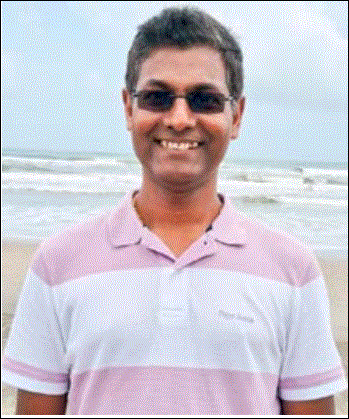
Anil Israel lives in Mannheim, Germany, with his wife Sunitha and their 6 children.


Comments