.png)
.png)
_edited.png)
.png)
.png)
.png)


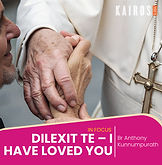
Dignity beyond Charity Sometimes, a simple fleeting moment can awaken something deep within us – a moment that might otherwise have passed us by. One such moment recently went viral: a Swiggy delivery partner arrived on his bike with his little son seated behind. Touched at seeing the father juggling work and childcare, the customer offered him a cash tip. But the delivery partner gently declined saying, ‘Sir, I only want a good rating.’ In that humble response – dignified, restrained, and profoundly human – the world glimpsed the quiet strength of countless unseen workers who hold our cities together. This story resonates deeply with the message of Dilexi Te, the Apostolic Exhortation of Pope Leo XIV, which reminds us that the poor and the struggling are not objects of charity, but persons who reveal the face of Christ through their labour, resilience, and hope. The man did not seek pity; he sought fairness – the dignity of being recognised for his work. His silence spoke louder than any emotional appeal: love for the poor begins not with generosity alone, but with respect, justice, and human recognition. The sight of a father at work with his child in tow is more than an emotional scene, it is a testimony of sacrifice, responsibility, and love. Dilexi Te challenges us to look beyond fleeting sympathy and to see such individuals not as problems to fix, but as brothers and sisters entrusted to our care. The question before us is not merely how we feel about such stories, it is how we, as a society and as believers, choose to treat those who labour quietly among us every day. Later online conversations pointed to deeper realities: fair wages, childcare struggles, insecure work, and the vulnerability of gig-economy families. It is here that the Exhortation calls us to move from sentiment to structural compassion, from emotion to engagement, from pity to solidarity. Christian love is never passive; it is a love that questions, advocates, and acts for justice. In the quiet dignity of this delivery partner, we encounter Christ walking our streets – the ordinary worker, unseen, uncelebrated, yet bearing hope in silence. His story invites us to examine our attitudes, our priorities, and our way of seeing the world. As disciples of Christ, may we learn to recognise His presence in every worker we meet – to speak kindly, to act justly, to support fair systems, and to cultivate a heart that chooses solidarity over indifference. Let us ask the Lord for the grace to move beyond charity to true Christian love, a love that honours dignity, uplifts the weak, and builds a world where every person is treated as a child of God.

Ask Fr Bitaju In the Book of Wisdom, ‘wisdom’ is referred to as ‘she’. Jesus is the Wisdom of God. Shouldn’t ‘wisdom’ be known as ‘he’, since wisdom is Christ? Your question of how to refer to ‘wisdom’, particularly in the context of the Book of Wisdom and its relationship to Christ, involves a nuanced understanding of biblical language, theological concepts, and the nature of personification in Scripture. Personification of Wisdom: In the Book of Wisdom, as well as in other wisdom literature such as Proverbs, ‘wisdom’ is often personified as a female figure. This personification serves to convey the qualities of ‘wisdom’, such as insight, understanding, and guidance, in a relatable manner. The use of ‘she’ in this context highlights the nurturing and life-giving aspects traditionally associated with femininity. Christ as the Wisdom of God: In Christian theology, particularly as articulated in the New Testament, Jesus Christ is identified as the Wisdom of God. For instance, Paul writes in 1 Corinthians 1:24, Christ the power of God and the wisdom of God. This identification of Christ with wisdom does not negate the personification of wisdom as female in the Old Testament; rather, it expands the understanding of wisdom to include the fullness of divine revelation in Christ. Gender and Divine Attributes: It is important to recognise that God transcends human concepts of gender. While Scripture uses masculine pronouns for God and Christ, it also employs feminine imagery to describe various attributes of God, including wisdom. The Catechism of the Catholic Church notes that ‘God is neither man nor woman: He is God’ (CCC 370). Thus, the gendered language used in Scripture reflects cultural and linguistic conventions rather than definitive statements about God’s nature. Theological Interpretation: The Church understands that the personification of wisdom in the Old Testament serves a specific purpose within the context of salvation history. Wisdom, as a divine attribute, is fully realised in Christ, who embodies all that wisdom represents. The Church Fathers and theologians have often reflected on this connection, emphasising that Christ fulfils the role of wisdom in a way that transcends the original personification. Liturgical and Devotional Language: In liturgical and devotional contexts, the language used to refer to wisdom may vary. While some may choose to use ‘she’ when discussing the personification of wisdom in the Old Testament, others may prefer to refer to wisdom in the context of Christ as ‘he,’ reflecting the understanding of Christ as the incarnate Wisdom of God. Both usages can coexist, depending on the focus of the discussion, whether it is on the literary and theological aspects of wisdom in the Old Testament or on the Christological fulfilment of that wisdom. In conclusion, while Wisdom is personified as ‘she’ in the Book of Wisdom and other wisdom literature, the identification of Christ as the Wisdom of God allows for both interpretations to coexist. The gendered language used in Scripture serves to convey deeper truths about divine attributes and the nature of God. The Church embraces this complexity, recognising that Christ, as the fullness of divine wisdom, transcends human categorisations of gender.

POPE TALK The Church calls believers to gather everything, joys and sufferings alike, before God, asking Him to renew, in us and around us, in the coming days, the wonders of His grace and mercy. Dear friends, with the grace of Christ, let us begin today to build a time of peace, disarming our hearts and refraining from all violence. A peace that is unarmed and disarming, which comes from God, a gift of His unconditional love, and is entrusted to our responsibility. The world is not saved by sharpening swords, nor by judging, oppressing, or eliminating our brothers and sisters, rather, it is saved by tirelessly striving to understand, forgive, liberate, and welcome everyone, without calculation and without fear. In order to allow God’s action in our personal lives, people must ‘empty’ themselves and cultivate a deep inner life. In this spiritual path, the presence of God becomes familiar and occupies our inner space, graces and spiritual riches blossom, and even daily tasks become easy and light. Seeing one’s daily work as part of the Church’s mission and doing one’s job well gives glory to the Lord. The person and families must be at centre of the labour system so that the dignity of each employee is recognised and their real needs met. Three aspects that require particular consideration in the business world are the dignity of the person, mediation and the promotion of safety. Spiritual journey is a path that is simple and arduous at the same time. Simple, because it requires nothing other than constantly calling God to mind, with small, continual acts of praise, prayer, supplication, adoration, in every action and in every thought, with Him alone as our horizon, source, and end. It is demanding because it requires a journey of purification, of ascetic discipline, of renunciation and conversion of the most intimate part of ourselves, of our mind and our thoughts, even more than of our actions. The true value of life is not measured by days full of activities or of idleness. We often perceive how too much doing, instead of giving us fulfilment, becomes a vortex that overwhelms us, takes away our serenity, and prevents us from living to the fullest what is truly important in our lives.

Jesus Youth: A Simple Turning to the Lord How We Pray in Jesus Youth: I once heard Sibin share his encounter experience. Growing up in a Catholic family, prayer and spirituality were not new to him. But early in his youth, when a season of deep darkness came over him, he felt completely lost. In God’s providence, he came across a group of young people and joined one of their gatherings. As they sat together, some of them began to talk to the Lord in a very natural manner. ‘They spoke to Jesus in a very personal way, as if He were a friend sitting there in front of them,’ Sibin said. ‘That was so cool!’ he thought. ‘I, too, want to have that kind of warm, personal relationship with God.’ That simple experience set him on a renewed journey – one that radically changed everything in his life. This is often how prayer begins in Jesus Youth: not with methods or techniques, but with a simple turning of the heart to the Lord. The Heart of the Movement ‘These people are so prayerful. That’s why I love Jesus Youth.’ When a sister once said this enthusiastically, I didn’t know whether to feel happy or uneasy. Happy, because she loved these young people and sensed their depth and sincerity. Uneasy, because if Jesus Youth were understood merely as a group of young people who pray a lot, something essential would be missing. A good Jesus Youth, to me, is mission-driven, joy-filled, and prayerful – a person and a community alive in the Spirit and oriented outward. That was what moved Sibin so deeply, and that is often what touches others whenever Jesus Youth reaches out. Prayer in JY is never an end in itself; it fuels mission, joy, and loving service. One Prayer, Many Expressions To understand the distinct Jesus Youth approach to prayer, we need to see it in its various expressions. A person turns to the Lord: • personally, in one’s own quiet time • communally, in a friendly and faith-filled gathering • through mission, in concrete encounters with people and their needs David, a parish trustee and active in Jesus Youth, is a good example. When people in his parish are deeply troubled, they come and ask him to pray with them. In a short span of time and despite other members of the parish office, David has won hearts as someone who will actually sit down, listen, pray with, and intercede for them. How did this come about? David is part of a small Jesus Youth weekly gathering where members chat, share life, and pray together. Even more importantly, through Jesus Youth, he has acquired the habit of a daily quiet time – a personal prayer that keeps him alive and attentive to the Spirit. In Jesus Youth, this triad is essential: personal prayer, community prayer, and spirit-led mission, each nourishing the other. Don’t Get into a Rut When Joseph first joined a Jesus Youth small group, he was delighted by the singing. But after a while, when it continued to be only singing and nothing more, he grew frustrated. Later, he remarked, ‘What I look for in good prayer is a balance between the heart and the head, between spontaneity and order.’ This insight applies not only to community prayer but also to personal prayer. In Jesus Youth, prayer is meant to balance a friendly, joyful exterior with a clearly ordered interior flow. To an outsider, the group may simply appear warm, connected, and caring. But within, the prayer gently moves forward, step by step, forming a meaningful whole. At this point, it is helpful to clarify some misplaced expectations about prayer. • Chasing an emotional high: Peace and joy often accompany prayer, but deliberately seeking excitement or emotional intensity can mislead us. Prayer is about presence, not sensation. • Looking for an orderly performance: Life is not always neat and well-arranged, and neither is prayer. Distractions, dryness, confusion, and even boredom are part of the journey. This does not mean prayer has failed. • Always wanting a perfect and holy time: Jesus contrasts two people at prayer: a smug Pharisee confident of his holiness, and a confused, repentant sinner who simply lifts his heart to God. The Lord commends the latter. What matters is sincerity, not perfection. Seeing the Lord Present The Psalmist says, I keep the Lord always before me (Psalm 16:8). This quiet awareness of God’s nearness, sometimes consoling, sometimes challenging, is like an underground stream nourishing everything in the garden of prayer. Several elements help a Jesus Youth remain anchored in this presence. • Something of beauty: A song, a video clip, an image, or a beautiful natural setting can stir the heart and gently lift it toward the Lord. • The Word of God: The life and words of Jesus, and the stories of Scripture, clear the inner fog and help us behold the face of the Son. • Creative gestures: A simple posture, symbol, or action – used appropriately in personal or community prayer – can open a new path to the Spirit’s movement. • Free praise: Allowing the heart to express itself in short phrases of love, gratitude, or surrender – spoken or sung – keeps prayer personal and alive. • Praying and singing in the Spirit: At times, words flow freely as the Spirit prompts praise or intercession beyond prepared texts. • Listening and responding: Prayer is not only speaking but also listening – allowing God’s gentle promptings to shape our response. • Connect to the Lord and others: In personal and community prayer, this shared turning to the Lord builds unity and deepens mutual care. Finally Praying in Jesus Youth is essentially a simple turning to the Lord, held within a healthy balance between spontaneity and order, freedom and form, joy and depth. When prayer flows this way, it keeps us rooted in Christ, open to the Spirit, connected with the others, and ready for mission. That simplicity is not shallow; it is profoundly evangelical.
.jpg)
Engage : Call to Holiness: Our Primary Vocation Introduction : Our foremost calling is to be holy, like the Heavenly Father, writes Melvin George. Highlight While embracing a holy life does not mean losing joy, some may still fear that sainthood demands extreme suffering. Sometimes we focus on the diseases, painful deaths, and hardships they endured. It is a reality we all must face: one day, we will die. It is ironic that we all want to go to heaven, yet we do not want to die. However, we must understand that it is not how someone dies that makes them a saint, but how they lived and our lives do not end with death. Article Each of us has been called by God, uniquely and personally. When we hear the phrase ‘call of God,’ we may think about vocations like religious life and priesthood. We often believe that only those who are called to priesthood or religious life are the ones called by God. We often fail to understand that married life is also a call, as important as priesthood and religious life. Despite the beauty of these vocations, many young people today hesitate to embrace them, fearing commitment may limit their freedom. We hear of young people voicing their fear of marriage or preferring against it. We often hear of discussions on the low numbers of people showing interest in religious life and priesthood. But when we look deeper into this issue, there is something subtle that people fail to recognise. While these vocations are calls from God, our foremost calling is to know, experience, love, and be like our Heavenly Father, and eventually to be with Him in heaven. Our vocations are the paths through which God works in us and through us and leads us to Him. We are called to imitate our Heavenly Father in three ways: to be holy, You shall be holy, for I am holy (1 Peter 1:15-16); to be perfect, Be perfect, therefore, as your heavenly Father is perfect (Matthew 5:47-48); and to be merciful, Be merciful, just as your Father is merciful (Luke 6:36-42). In short, we are called to sainthood. This is our primary call. As Pope Francis said, ‘To be saints is not a privilege for the few but a vocation for everyone.’ When we fail to understand that it is to the sainthood that our God is calling us, and to nurture the saint in us, we fail to recognise our call to vocation or we hesitate to step into it trusting the One who calls us. Breaking the Myths about Sainthood We often see saints from a distance or behind glass cases in churches. We seek their intercession too, but we fail to see that they were people who lived, showing us that it is possible for humans to be like our Heavenly Father. We assume that our sinful lives and past makes sainthood unattainable. When Jesus says, Blessed are the pure in heart, for they will see God, it does not mean that a sinner with a heart of stone cannot have a conversion of heart. It does not mean a man who has a heart that stinks with festering wounds cannot be healed and sing with joyful lips. Our true self is revealed when we are alone, away from the eyes of others. We often wear a mask in public, hiding secret sins that numb us. Even in this hopelessness, Jesus is our only hope. As Isaiah 59: 1-2 says, See, the Lord’s hand is not too short to save, nor his ear too dull to hear. Rather, your iniquities have been barriers between you and your God, and your sins have hidden his face from you so that he does not hear. The Scriptures unveil this beautiful masterplan that the Heavenly Father has revealed through His only Son Jesus Christ to wash away our sins with His blood and clothe us with sainthood. St Joseph Cafasso reminds us, ‘Heaven is filled with converted sinners of all kinds, and there is room for more.’ Another assumption might be the fear of losing the fun and joy of life, giving it all up to live in monasteries or convents. St John Bosco, who dedicated his whole life to the youth, was a humble priest who knew the beauty and vibrancy of youthfulness. He breaks this bias by saying: ‘Run, jump, have all the fun at the right time. But for heaven’s sake, do not commit sin.’ Fun itself is not wrong; rather, what is wrong is justifying or engaging in sinful actions under the guise of fun. In fact, joy, innocent humour, and fun are visible signs of the Holy Spirit. While embracing a holy life does not mean losing joy, some may still fear that sainthood demands extreme suffering. Sometimes we focus on the diseases, painful deaths, and hardships they endured. It is a reality we all must face: one day, we will die. It is ironic that we all want to go to heaven, yet we do not want to die. However, we must understand that it is not how someone dies that makes them a saint, but how they lived, and our lives do not end with death. The Adventure of Sainthood Beyond personal fears, external challenges also stand in the way of sainthood. The world itself presents obstacles, as St John warns, We know that we are of God, and the whole world is in the power of the Evil One. (1 John 5:19) Rather than discouraging us, these obstacles invite us to an adventure. How? In business, entrepreneurship, engineering, or research, when we see a challenge, problem, or gap, we see an opportunity to find a solution, bring innovation, create a new market, or embark on an adventure. Similarly, if we live in a world that is not favourable for sainthood, then that itself is a call for an adventure. It is easy to go with the flow and live in sin in a hypersexualised and ‘pornified’ culture. But it is an adventure to become the counterculture and swim against the flow. A trek becomes an adventure only when the path turns steep and uncertain. Sainthood is no different. Similarly, sainthood is a call to be in the world but not of the world. To all those who are afraid of becoming saints in the twenty-first century, Saint John Paul II offers this encouragement: ‘Do not be afraid to be the saints of the new millennium! Follow Jesus Christ, who is the source of freedom and light. Be open to the Lord so that He may illuminate all your ways.’ The Modern Call to Sainthood A poem that went viral under Pope Francis’s name was not actually written by him. It seems to have originated in Portuguese, possibly from Brazil, and was inspired by the words of Saint John Paul II before being translated into English. Here it is: We need saints without veils or cassocks. We need saints who wear jeans and sneakers. We need saints who go to the movies, listen to music, and hang out with friends. We need saints who put God in first place but who let go of their power. We need saints who have time every day to pray and who know how to date in purity and chastity or who consecrate their chastity. We need modern saints, saints of the 21st century with a spirituality that is part of our time. We need saints committed to the poor and necessary social changes. We need saints who live in the world and are sanctified in the world, who are not afraid to live in the world. We need saints who drink Coke and eat hot dogs, who wear jeans, who are internet-savvy, and who listen to CDs. We need saints who passionately love the Eucharist and who are not ashamed to drink soda or eat pizza on weekends with friends. We need saints who like movies, the theatre, music, dance, and sports. We need saints who are social, open, normal, friendly, happy, and good companions. We need saints who live in the world and know how to enjoy the pure and beautiful things of the world but who are not of the world. Author Profile Melvin George was part of the 29th batch of the Jesus Youth full-timers, and serves in the National Prolife Ministry. He lives in Changanacherry, India, and is married to Jisha Joseph.
.jpg)
Engage : The World of VR – an illusion or a supplement? Intro Cybersecurity professional Edwin Joseph cautions us on the rising use of VR among the younger generation. Virtual Reality (VR) represents a profound technological leap. It is not merely jumping to another screen; it is an immersive ‘world of illusion.’ Let’s dive into this to understand it better. Unlike a television or smartphone, a VR headset is designed to completely block out hearing and visual input of the surrounding physical environment. It replaces God's creation with a perceptually rich, man-made simulation. The unique selling point (USP) of VR is this experience of total immersion. This is precisely what makes it so compelling, and is also its primary source of danger. Parents and Catechists lament, ‘Our children are overly inclined to technology due to societal influence without considering the consequences.’ Key Risks Psychological. Youth and teens nowadays face peer pressure to build idealised avatars of themselves on various social media platforms on the pretext of privacy, which is nothing but an imaginary artwork rather than their authentic physical self. This blurs the line between genuine identity and their relationships vs orchestrated and programmed digital companions in a virtual world. Excess exposure leads to neglect of real-life responsibilities. Physical and Neurological. Eye strain, headaches, motion sickness, and long-term neurological effects, neck and spine stiffness from remaining in the same position for hours without a break. Spiritual. VR paves the way for escapism among the young generation from the real grace of sacraments to the world of unsafe content on the pretext of entertainment. Algorithms in VR can shape desires, behaviours, and even beliefs, especially in impressionable children. Immersive VR can shift attention from interior conversation to that of the external simulation, weakening the soul’s spiritual journey. The Church reminds us in Christus Vivit (Pope Francis, 2019) that young people must be rooted in real encounters, not digital substitutes. VR technology can be valuable for immunocompromised individuals, far more than for a typical healthy teenager. Their limitations in travel and social interaction make virtual pilgrimage and guided learning meaningful alternatives, when used with balanced screen time and supervision. Similarly, for those recovering from trauma, VR therapy can support initial assessments by reducing the intensity of human interaction, gently guiding them toward emotional stability. Technology is permissible but demands prudence. The guiding question for every user and family: Does this lead me closer to Christ or away from Him? The saints remind us that holiness should be ‘lived’ rather than ‘felt’. Practical guidance: Treat VR as occasional leisure, not daily escape. Set clear limits: age-appropriate rules, session time caps, and screen-free days. Supervise actively: know apps, experiences, and social interactions; pre-screen content. Prioritise real life: schedule outdoor play, communal worship, shared meals, and service. Share and discuss discernment: how virtual identity differs from real identity; teach children that technology is a tool, not a master. Conclusion Ultimately, every family and individual are called to be the ‘salt of the earth’ and ‘light of the world’. We must remember that holiness is not found in escaping reality. Rather, holiness lies in confronting real life like Jesus did – with all its joys, sorrows, and challenges – armed with the compass of faith, hope, and love. Author profile Edwin Joseph is a FinTech and cybersecurity professional, who collaborates with global media and mission initiatives focussed on children, teens and youth. He hails from Kerala, India.
.jpg)
Experience : When Words from the Bible Leaped to Life Intro Sonia T Sunny shares how a brief encounter with a friend calmed her fears and worry and brought joy and peace. The one who looked like a man touched me again and strengthened me, saying, ‘Do not fear, beloved. Peace! Take courage and be strong.’ When he spoke to me, I grew strong and said, ‘Speak, my lord, for you have strengthened me’ (Daniel 10:18-19). This was the Word of God I got before a journey I had to make from Calicut to Kochi for my baby’s visa application to the UK. It being a long journey, my parents and siblings accompanied me to help care for my elder son who is two-and-a-half, and my baby, who was two months. As all the paper work for the visa application was done by myself, I was apprehensive about things going wrong. What if the application got rejected…? Everyone would blame me and the only thing I could do would be to leave the baby here in India with my parents and return to the UK for work. And this I simply could not imagine. So with a heavy heart, I opened my Bible before the journey and got the above verse. This was the first time I was coming across this Word of God. It immediately brought me peace, I believed it and tried to repeat it multiple times to calm my mind. We had an hour-and-a-half’s journey to reach Calicut and catch the train. All throughout the way, my mind was in turmoil. At the railway station, while we were waiting for my brother to park the car and bring our bags, I met an elder of the Calicut Jesus Youth. He had come to drop his daughter at the station. I cheered up the moment I saw him, because even though I had been home for the past few months, with the last weeks of my pregnancy, delivery and the period after, I had hardly met any JY leaders and friends in Calicut. With an every graceful smile, he came up to me. I introduced my parents and we spoke for a short while. He then patted my cheek and drew the Sign of the Cross on my forehead and on my kids as well. At that very moment, with a single gesture and through his presence, I could feel the work of the Holy Spirit. I was filled with great joy and peace. Warmth and love of the Holy Spirit covered me like a blanket. On the train, I reflected on his presence but by then, I had forgotten the Word of God. We reached Kochi around midnight and our accommodation. Suddenly Daniel 10:18-19 came to my mind. I rushed to my Bible and read it again, wondering about the presence and prophecy of the Living God. I experienced what I had learned in the Paul Course (one of the formation courses of the Jesus Youth movement) session on the Word of God – that Jesus was the Word of God. In the beginning was the Word, and the Word was with God, and the Word was God (John 1:1). I personally experienced the Word of God becoming flesh and alive in my life. Indeed, the word of God is living and effective, sharper than any two-edged sword, penetrating even between soul and spirit, joints and marrow, and able to discern reflections and thoughts of the heart (Hebrews 4:12). When God gave me the grace to rely on the Word of God, he sent me a man with the Holy Spirit to help me. As I write this, the Holy Spirit is inspiring me about how much our presence matters. As youth of Jesus, the living God, we who are filled with great anointing of the Holy Spirit and the love of God the Father – our prayerful presence is a great tool to spread the Gospel, for others to encounter the ever-loving God and the powerfulness of the Word of God. It is our responsibility to be filled with the Holy Spirit and the Word of God by following the six pillars (the spirituality of the Jesus Youth movement is rooted in six pillars: prayer, Word of God, sacraments, fellowship, evangelisation, option for the poor). Let us also meditate on how the presence of Mother Mary carrying Jesus in her womb filled Elizabeth and baby John with joy and the Holy Spirit. Let’s meet Jesus in the Word of God! Let us unite ourselves to Jesus so that He can use us and our words to save many more souls. Just so, your light must shine before others, that they may see your good deeds and glorify your heavenly Father (Matthew 5:16). A few weeks after our trip to Kochi, we successfully got the visa for my baby. Despite the hurdles and difficulties, we enjoyed the family trip and time together. A small meeting with a man filled with the Holy Spirit sweetened the memory and added for me another miraculous Word-made-flesh experience in my life’s journey. Praise God! Author Profile Sonia T Sunny works as a nurse in Watford, UK. She lives there with her husband and their two children.
.jpg)
Experience : Encountering Our Shared Dependence on Grace Intro On a yearlong commitment, Abigail George shares her experiences of working with the homeless. Since August 2025, I have been serving with the Jesuit Volunteer Corps, a yearlong commitment shaped by the Ignatian call to find God in all things. I chose to step into this year of service after experiencing a deep sense of desolation at the beginning of my professional career. Though my work was stable, I felt unfulfilled, restless, and without a clear sense of purpose. I was deeply aware of the gift of a supportive family, whose encouragement gave me the freedom to enter into discernment and search for something more. I was drawn to the Jesuit Volunteer Corps because of its four pillars: community, simple living, social justice, and spirituality. These values had already shaped me through earlier experiences at School of Nazareth (a formation programme in Delray Beach, Florida) and the Taizé community in France (I lived and volunteered there for 3 months). I felt the invitation to something deeper: not simply to admire these values, but to live them daily in an integrated and intentional way. While I entered the application process open to many types of placements, I carried a particular fear of working with the homeless community. I was aware of the prejudices and judgments I held, shaped by my own limited worldview. I doubted whether I had the capacity to accompany people whose suffering felt overwhelming and complex. In hindsight, I recognise this fear as an invitation to move toward the margins. I was ultimately matched with Friendship Park, a programme of Loaves & Fishes in Sacramento, California. Loaves & Fishes is a non-profit organisation that provides respite and survival services for people experiencing homelessness. Founded by a couple deeply formed by Jesuit theology, the organisation operates with an ecumenical spirit that reflects the Church’s long-standing call to unity through love for the poor. The conviction of the inherent dignity of every human person and that the poor are not burdens to society, but neighbours whose lives demand justice and care shapes the mission of Loaves & Fishes today. The core expectation of every staff member and volunteer is to love fully and to be wholly present to the person before us. Loaves & Fishes includes many programmes, such as a school for children experiencing homelessness and a shelter for women who face deep trauma and mental health issues from years of being on the street. I serve at Friendship Park, an outdoor respite centre for adults experiencing homelessness. Guests are free to enter and remain without expectations or requirements placed upon them. Within this space, they have consistent access to meals, hygiene supplies, survival items, and connections to external resources for mental health, recovery, rehabilitation, and housing support. Loaves & Fishes is not focused on resolving the deeper traumas or systemic injustices that shape homelessness, but to love faithfully and to remain consistent. Through this steady affirmation of the person’s dignity, the hope is that guests are empowered to trust themselves, trust others, and eventually become open to the resources and relationships that can support healing and change. In my formal role as the Special Events and Activities Coordinator, I plan chess tournaments, bingo, and art projects, but my deeper vocation is one of accompaniment. I am called to build community, foster relationships, and help cultivate a space where guests feel safe, welcomed, and truly seen. Much of this work unfolds through simple presence, consistency, and the willingness to listen. At the same time, this ministry has continually challenged my desire for efficiency, measurable outcomes, and visible success. There are days when it feels as though nothing I plan is enough and few people are willing to participate in the activities I have prepared. I have made it a practice to walk around the park to personally invite each guest into whatever space has been created for that day. More often than not, I am met with rejection. In the beginning, this affected me deeply. I struggled with the sense that my efforts were failing if attendance was low or if I was turned away repeatedly. Over time, however, my understanding of success has shifted. The few people who do choose to come often open the door to genuine connection and relationship. Through this work, I have been forced to slow down, to pay attention, and to notice where consolation arises in unexpected places, and where God’s grace is quietly at work. I am learning that the people I accompany are not objects of service, but subjects of encounter. It has been tempting to compartmentalise, to show up fully during work hours and then retreat into comfort and distance. Living in the city has made that separation impossible. I encounter the people I serve at Friendship Park in the streets, at bus stops, and in the raw reality of sleeping outside. In these moments, something shifts. We recognise one another. They acknowledge me, and I acknowledge them – not as roles or responsibilities, but as people who know each other’s names and stories. The relationship does not end when the workday does. It becomes part of my daily life, shaping how I move through the city and how I understand community. This integration has revealed to me that love for the poor is not meant to be a task, but a way of living. One of the most unexpected graces of this work has come through my co-workers. They are not saints or ‘good’ people. They struggle with their own wounds, frustrations, and human limitations. There are moments of tension, exhaustion, and imperfection. Yet they continue to show up because they have made a commitment through their work to serve the poor with care and integrity. This has been deeply liberating for me. It has dismantled the belief that one must be a certain type of person, morally exceptional, spiritually advanced, or emotionally whole, to accompany others in their suffering. God does not wait for our perfection before calling us into mission. Pope Francis often reminds the Church that ‘the poor are at the centre of the Gospel,’ not because they are idealised, but because they reveal our shared dependence on grace. This awareness has made my work so much more meaningful because loving the poor does not stop with material poverty. While homelessness exposes a harsh and visible injustice that demands our attention, it has also revealed to me that every person carries some form of poverty. In naming our shared need for grace, love for the poor becomes love for all, without ever diminishing the real suffering of those who lack the necessities of life. When I acknowledge my own poverty, the distance between myself and those I serve collapses. Love for the poor becomes less about charity and more about communion. Pope Francis writes that true solidarity is learned only through encounter, and it is in these encounters that Christ is revealed. The graces I have received from this year are many: deeper humility, greater freedom in my own poverty, and a more honest faith. I am learning that love for the poor is not measured by outcomes, but by fidelity, showing up, remaining attentive, and trusting that God is already at work. This year of service has revealed love not as an abstract ideal, but as a daily, incarnational practice. I have come to understand that loving the poor is not an optional expression of faith, but a privileged place of encounter with Christ Himself. Author Profile Abigail George is a Jesuit Volunteer in Sacramento, California. Originally from Coral Springs, Florida, she was deeply formed through her family’s involvement in Jesus Youth. She earned a bachelor’s degree in Economics and Sociology from Florida Atlantic University in May 2023. She continues to discern how faith, justice, and community intersects in her life.

Up Close : Shepherd with the ‘smell’ of the Sheep Intro Kairos Global’s Editor-in-Chief Sijo Thomas sits down with His Excellency Dr James Anaparambil, Bishop of Alleppey to discuss a topic close to the bishop’s heart, love for the poor. Article Your Excellency pioneered the inclusion of preferential option for the poor as a pillar of the Jesus Youth movement. What prompted you to do so? I don't believe I pioneered anything; it is simply returning to the core of the Gospel. An ecclesial movement cannot be Gospel-centric unless its primary attitude is rooted in ‘Blessed are the poor in spirit.’ The Jesus Youth movement attracted many young professionals, whose education and background were often on a path toward status, job security, and the ‘upper layer’ of society. There was a real risk that their faith could become focused solely on individual salvation – a private relationship with God that ignored the structural reality of the world. I feared a faith that limited charity to ‘almsgiving’ without love. Almsgiving can often be like paying taxes, a necessary pooling of goods for a system to function, but one that requires no personal transformation. If we look at Church history, before traditional orders became what they are now, they were charismatic initiatives, mendicants, and street preachers. The common thread of every great ecclesial movement to the current day, was a radical embrace of the poor as its central focus. The two great commandments, love of God and love of neighbour, must be reflected equally. To ignore the poor is to contaminate the Gospel, their presence is woven into every page of Scripture. My own conviction was shaped by the ‘wave’ of the 1970s, 80s, and 90s. During my seminary days and early priesthood, I was deeply influenced by Latin American Liberation Theology. While we must avoid the ‘utopian’ trap of thinking the Kingdom of God can be fully realised through material sharing alone, that era provided a necessary eye-opener. It forced us to look at the chasm between the rich and the suffering millions. If you develop a spirituality that does not open your eyes to the suffering of your neighbour, that spirituality is impotent. Adding the ‘Option for the Poor’ as a pillar of the Jesus Youth movement was an act of balance. It was meant to ensure that our spiritual growth was not just internal, but ecclesial. My biblical training and experience as a teacher convinced me that this wasn't just a ‘good idea’, it had to be central to our identity. True spirituality does not just look upward toward God; it looks outward toward neighbour. By making the poor a pillar of the movement, we ensure that as we rise in the world, we never lose sight of those the Gospel calls us to serve. What were your first impressions of Pope Leo’s Dilexit Te? The Pope's message came as no surprise, rather I felt a sense of profound affirmation. He has placed renewed emphasis on what is truly central: love and care for the poor are not mere options or even gestures of philanthropy, but fundamental. I was overjoyed to see the Pope place the core of the Gospel so clearly at the centre of the Church’s perspective. Toward the end of the Exhortation, our Holy Father notes that the ‘preferential option for the poor’ must be central to all ecclesial movements. By tracing through Scripture, from the Church Fathers and saints like St John Chrysostom and St Francis of Assisi, the Pope demonstrates love for the poor has always been a constant in our faith. This document strengthens us by returning us to our roots. I am particularly moved because Pope Leo has set the tone for his own papacy on the heels of Pope Francis, who had initiated this document. How has your Christian journey been shaped by the poor? Coming from a simple village family, I learned early on a striking truth: the poor are often the most caring people, bound together by a radical sense of mutual responsibility. I am often reminded of my dear friend, Allen who passed away recently. He dedicated his life to diocesan charity. During a Bible reflection years ago, he shared a profound image, ‘The poor are like a strong, steady tree, and the rich are like creepers clinging onto the tree. It is not so much that the poor depend on the rich, but that the rich depend on the poor to survive.’ This imagery upends our worldly logic. If we were to remove ‘Blessed are the poor’ from Scripture, we would be decapitating the very essence of the Gospel. Poverty is a multifaceted human reality – both material and spiritual – and there is a specific blessedness found within it. The poor teach us that life’s value is not anchored in wealth or comfort. They prove that the world does not survive on capital, but on the capacity to share and care. One encounter from 1985 remains etched in my memory. I was a deacon attending a meeting in Chennai, India. My roommate was a blind student. It so happened while we were climbing a flight of stairs, he reached out, groped for a switch, and turned on the light. ‘It is for you, not for me,’ he said. That was a revelation. Despite my sight, I needed light. He lived in darkness yet was magnanimous enough to provide light for me. Decades later, this lesson returns to me: those we perceive as ‘lacking’ often provide light we never realised we needed. There is an elegance in the hospitality of the poor. They open their doors without discrimination, placing the ‘other’ at the centre of their world. In contrast, the wealthy often open doors selectively – for the sake of networking, friendship, or personal gain. The poor practice an ‘other-centeredness’ that is pure and selfless. It reminds us that even the wealthiest person can be spiritually destitute. Jesus, who had everything, chose to be poor to show us that we are merely custodians, not owners. The notion that ‘all I have is mine’ is a spiritual fallacy. The Psalms consistently remind us that God is the God of the poor. As Psalm 146:7-9 beautifully declares: The LORD sets prisoners free; the LORD gives sight to the blind. The LORD raises up those who are bowed down; the LORD loves the righteous. The LORD protects the resident alien, comes to the aid of the orphan and the widow, but thwarts the way of the wicked. My contact with the poor has been profoundly enriching. In their rustic, natural, and down-to-earth sincerity, I have found a more honest version of humanity. They have taught me that to be ‘poor in spirit’ is not about what we lack, but about how much room we leave for God and for one another. How have you understood the Church's love for the poor? The Gospel of John reminds us, No one has ever seen God. The only Son, God, who is at the Father’s side, has revealed him (1:18). Jesus is the visible face of the invisible Father. However, John writes in his letter, No one has ever seen God. Yet, if we love one another, God remains in us, and his love is brought to perfection in us (1 John 4:12). While God remains unseen, His presence becomes tangible through our actions: If we love one another, God resides in us. We know God by looking at the face of Christ, and Christ Himself tells us where to find that face today – in the poor, the marginalised, and the suffering. To see Christ in the poor and to see God in Christ are not two separate acts; they are the same. The very identity of the Church is bound to this connection. The word ‘church’ (and the German Kirche) originates from the Greek kyriakos, meaning ‘belonging to the Lord.’ If the Church belongs to the Lord, and the poor belong to the Lord, then the two are inseparable. The Church is not merely a building or an institution that helps the poor; it is a body that is constituted by them. To suggest that the poor have no place in the Church is a theological contradiction. It is as ‘suicidal’ as suggesting that patients have no place in a hospital. A hospital without the sick is just a building; a Church without the poor is a betrayal of its own name. From the very beginning, the biblical concept of the ‘little flock’ and ‘poor of the Lord’ (the Anawim) has defined the people of God. If we claim to love Christ, that has to be manifested in our love for the poor, for that is where His face is most clearly revealed. As a bishop, how do you strive to keep love for the poor as a priority? In the Diocese of Alleppey, the reality of material poverty is ever-present. Most of our people are daily wage earners – primarily fisher-folk – who live without financial security or the guarantee of a daily catch. In our diocese, when a parish builds a church, they also ensure a home is built for a family in need. Recently, I blessed three such houses. Many of our priests and volunteers have dedicated themselves to constructing homes for the homeless and providing medical assistance. We maintain a dedicated fund to ensure this support is consistent. In modern times, poverty has evolved. While absolute starvation may be less common, we are seeing new, ‘stark’ forms of poverty: The ‘poverty of the rich’ – being left alone, and having no friends or visitors. A lack of guidance for our youth who are exposed to the allurements of ‘easy money’ and substance abuse. The feeling of being ‘orphaned’ in a fast-moving world. To address this, we are building ‘bridges of relationship.’ We have introduced medical teams and counsellors who visit Sunday schools to speak about mental health and character formation, protecting our children from the dangers lurking in a world of drugs and distractions. We promote fellowship groups and local self-employment initiatives, to help people create their own jobs. We are also investing heavily in the education of our youth, which remains the greatest tool against generational poverty. While the challenges we face are immense and sometimes feel overwhelming, our steps are focused on building grounds of relationship and common responsibility. In your opinion, what prevents young people exercising their love for the poor? There is a profound tension in the souls of young people today. On one hand, we see a generation that demands fairness, understands systemic injustice, and wants a society where every citizen is safeguarded through honest distribution and tax systems. Yet, on the other hand, they face internal and external obstacles that make it difficult to truly exercise a love for the poor. The first obstacle is the economic pressure that defines modern life. The cultural motto, There is no future or guarantee unless you earn creates a ‘mad race’ to be first, to have the latest technology, and to gain access to the newest gadgets. We see a cycle where gadgets are discarded as soon as a new version appears, with little regard for the environmental toll on the planet. This isn't just greed; it is the response of a frustrated soul trying to find stability in a world that feels shaky. We often define freedom today as ‘my choice, my way,’ which is a falsified concept. When personal choice becomes the ultimate value, we fall into ‘original sin’ – not the simple act of eating a fruit, but the arrogant affirmation that ‘I alone will choose what is good for myself.’ By refusing to submit to ethics, to God, or to a higher command, young people are injected with a philosophy that prioritises the ‘I’ over the ‘We.’ This makes lifelong commitments, like marriage or sustained service to the poor, seem like unnecessary risks rather than fulfilling vocations. There is a unique misery found in the ‘soft children of the times.’ Even those who are materially rich often live with a ‘shaky’ future, possessing more anger than hope. When one lives only for themselves, they lose their sense of direction. To love the poor, we must shift our perspective. Like the third-class passengers on the Titanic, we often find that life is more vibrant and ‘real’ among those who have less, whereas the upper classes are often busy trying to escape or protect themselves. The ultimate obstacle is the fear of losing oneself. Yet, as the Gospel suggests: If you live only to save your life for yourself, you are already losing it. About Bishop James Anaparambil His Excellency Dr James Raphael Anaparambil has been the Bishop of the diocese of Alleppey since 11 October 2019. Till then he had been serving in various capacities such as member of the special team entrusted with the revision of the Malayalam Old Testament Bible, Vicar General of the diocese of Alleppey, the Rector of Pontifical Seminary Carmelgiri, Aluva, President of the Pontifical Institute Aluva, Professor of Pontifical Seminary Carmelgiri, Aluva, member of various national and international bodies like theological Association of India, Association of Biblical Scholars, etc. His association with the Jesus Youth movement goes back to his days as a priest, when he was the chaplain of the Professionals Ministry. He was also the priest animator of the Jesus Youth International Council for two terms.
.jpg)
In Focus : Faith in Action The Church’s Commitment to the Poor and Vulnerable Intro Through the ages, the Church has been steadfast in her commitment to the people on the fringes. Dr Joseph Sebastian highlights how the Church has stood by the poor. Love for people on the fringes of society lies at the very heart of the Gospel. In his first apostolic exhortation, Dilexi te1 (Oct 2025), Pope Leo XIV places Christ’s love for the poor at the centre of the Church’s mission and calls for a renewed commitment to those most in need. The document was begun by Pope Francis during the final months of his life as a follow-up to Dilexit Nos, and later completed by Pope Leo XIV, reflecting the shared conviction of both Popes that love for Christ is inseparable from care for the poor. ‘Love for the poor’ is expressed through concrete and compassionate actions shaped by the realities people face. Vulnerability is not uniform; it is influenced by geography, social norms, economic conditions, and unequal access to essential services. Across contexts, those living in remote or hard-to-reach areas, women, ethnic minorities, and migrants often experience deeper exclusion and fewer opportunities. Authentic Christian love recognises these differences and responds not with uniform solutions, but with justice, dignity, and practical solidarity. The ‘faces’ of this love are seen in the many individuals and communities who live with poverty, vulnerability, or marginalisation today. They include economically poor households and vulnerable families such as single-parent, elderly-headed, or child-headed homes. This love embraces persons with disabilities (physical, intellectual, or psychosocial) and extends to migrant workers, refugees, and asylum seekers seeking safety and dignity. It walks alongside survivors of trafficking, prisoners and those in conflict with the law, the urban homeless, the rural landless poor, and informal workers ranging from daily-wage earners to domestic workers. It also accompanies indigenous and tribal communities, children and women at risk, the elderly poor, those living with chronic illness, displaced and excluded communities, unemployed or NEET (Not in Education, Employment or Training) youth, people struggling with addiction, and farmers in distress due to debt or instability. Illustrative global data on selected vulnerable groups are presented below: People living in extreme poverty: About 831 million people were living in extreme poverty worldwide in 2025 according to the World Bank’s most recent global poverty update.2 Children at risk (out of school): An estimated 272 million children and youth were out of school globally as of the 2023 UNESCO Global Education Monitoring Report.3 Women at risk (violence and vulnerability): Nearly 840 million women have experienced physical and/or sexual violence in their lifetime (1 among every 3 women), according to WHO fact sheet on violence against women4 Persons with disabilities: An estimated 1.3 billion people worldwide live with significant disabilities, representing roughly 16% of the global population (1 of 6 among us), per WHO fact sheet on disability and health.5 Refugees, asylum seekers & forcibly displaced: According to UNHCR’s Global Trends report, an estimated 123.2 million people were forcibly displaced by conflict, persecution, and violence by the end of 2024.6 As Pope Francis defined, the people on the fringes, (the poor, the vulnerable, persons with disabilities, migrants, trafficked individuals, prisoners, or any community pushed to the margins), each represents a distinct expression of human need and a call for focused responses that address their particular circumstances. Together, these ‘faces’ remind us that the option for the poor is not a slogan but has to be a strong commitment to see, to understand, and to act with intentional, inclusive love. It is not an ‘either-or’: love for Christ necessarily leads to love for the poor, and love for the poor finds its fullness only when it flows from love for Christ. The Church's response to the poor is fundamentally driven by the theological principle of the ‘preferential option for the poor and vulnerable’ – a non-negotiable value of Christian faith and an integral part of Catholic Social Teaching. The basis for this ‘option’ is deeply rooted in both Scripture and Tradition. Imitation of Christ: Jesus Christ, who though he was rich (and all powerful), yet for your sake he became poor (2 Corinthians 8:9), is the ultimate example. His life, from his humble birth in a manger to his death as an outcast, demonstrates God's solidarity with the suffering. Scriptural Mandate: Throughout the Bible, God is consistently presented as the defender and liberator of the oppressed, such as widows, orphans, and strangers. The prophets fiercely condemned those who oppressed the poor and neglected justice (Isaiah 10:1-2). The Sermon on the Mount (Luke 6:20-23) and the parable of the Last Judgment (Matthew 25:31-46), where Jesus identifies himself with the hungry, sick, and imprisoned, provide a clear direction for believers. Human Dignity: The Church teaches that every person, regardless of their social or economic status, is created in the image and likeness of God and possesses an inherent, inalienable dignity.7 The well-being of the poor has the most urgent moral claim on the conscience of society. The Poor as Agents of Revelation: The poor are not just people who need our help. They also reveal God to us (Matthew 25:35-36 – I was hungry… I was… thirsty, stranger, naked, sick, in prison…). In a deep way, they become a ‘sign’ through which Christ meets the Church. Their struggles and experiences can speak to our hearts, teaching us about the suffering Christ and helping us grow in faith. This commitment reshapes the Church’s approach: moving beyond charity alone to confronting unjust systems, practicing true solidarity, and empowering the poor to shape their own futures. It integrates immediate assistance with social and spiritual accompaniment, reminding us that love for God is lived out in love for our neighbour, especially those on the fringes. Historically, the Church’s service to the poor evolved from simple grassroots acts of compassion to structured, transformative ministries for and with the vulnerable, not burdens to be managed, but lives to be honoured, protected, and uplifted. Historical Expressions of the Church’s Care for the Poor Early Church Communities: Shared resources so none lacked basic needs. (Acts 2:44-45; 4:32-35) Monasteries (Middle Ages): Became centres of charity, feeding the hungry, treating the sick, sheltering travellers, and caring for the poor during famine and plague. St Basil the Great (4th Century): Established the Basileias, one of the first large-scale Christian social service complexes with hospitals, hostels, and care for the poor.8 St Benedict & Benedictines: Organised community life around hospitality, ensuring the poor and strangers were treated as Christ. St Francis of Assisi (13th Century): Embraced radical poverty and rebuilt community life by identifying with the poor and inspiring a global movement of simplicity and service. St Ignatius and the Jesuits (16th Century): The Society of Jesus unites education and pastoral care with justice and rights-based advocacy. St Vincent de Paul (17th Century): Built structured systems – home visits, education, skill training, community kitchens, serving the poor. Catholic Workers Movement (20th Century): Dorothy Day founded houses of hospitality, combining direct service with a strong voice for social justice. Mother Teresa (20th Century): Served the ‘poorest of the poor’ through homes for the dying, orphanages, and care centres worldwide. Modern Responses: Holistic and Systemic Approaches In the modern era, the Church continues her long tradition of charity by embracing more holistic and collaborative ways of responding to human need. Alongside immediate relief, she commits herself to development, advocacy, empowerment, and innovation, seeking not only to ease suffering but to uphold dignity, protect rights, and foster lasting transformation in the lives of those in need. Emergency Relief & Humanitarian Response: Providing immediate assistance (food, shelter, healthcare, and protection) during crises to preserve life and dignity. Integrated Aid & Development: Linking relief with long-term solutions such as livelihoods, education, and financial inclusion so families can move toward self-reliance. Advocacy & Prophetic Witness: Challenging unjust systems and policies by promoting human rights, fair wages, humane migration, peace, and ecological justice. Human Dignity & Rights Protection: Defending the inherent dignity of every person, especially migrants, refugees, women, children, and other vulnerable groups. Community Empowerment & Participation: Enabling communities to identify their own needs, shape solutions, and take leadership in their development journeys. Peacebuilding & Reconciliation: Addressing the roots of conflict through dialogue, healing of memories, and fostering social cohesion. Inclusion of Women and Persons with Disabilities: Promotes leadership of women and ensures persons with disabilities are included and supported at all levels. Care for Creation: Responding to climate injustice by protecting the environment and supporting communities most affected by ecological degradation. Collaboration & Solidarity: Working with NGOs, governments, and civil society to amplify impact through shared responsibility and collective action. Response to New Forms of Poverty: Accompanying those experiencing loneliness, exclusion, mental distress, and loss of belonging – recognising poverty as relational and spiritual. Pastoral Presence & Accompaniment: Walking with the poor in compassion and hope, offering not only services but presence, listening, and belonging. How the Roman Curia serves the vulnerable and people on the fringes: Several Vatican departments coordinate global Catholic efforts for the poor, each addressing specific forms of vulnerability. Dicastery for Promoting Integral Human Development - Leads Church action on human dignity, justice, peace, and human rights, focusing on: Migrants & Refugees; People in need and on the margins (sick, prisoners, unemployed, victims of conflict and trafficking); Care for Creation and environmental justice Dicastery for the Service of Charity - The Pope’s direct charitable arm, providing emergency aid worldwide and supporting those in extreme hardship. Dicastery for the Laity, the Family, and Life - Supports vulnerable groups within family contexts - the elderly, children, caregivers, and the unborn. Dicastery for the Doctrine of the Faith - Ensures safeguarding and protection of minors and vulnerable persons across the Church. Other Bodies and Local Networks: Caritas Internationalis – global Catholic humanitarian confederation National Episcopal Conferences (eg, Catholic Bishops’ Conference of India) with commissions for local marginalised groups Pontifical Academy of Social Sciences – applying Catholic social teaching to contemporary issues Ecclesial Movements and Lived Witness: Beyond formal structures, the Church’s care for those on the margins is carried forward through recognised ecclesial and ecumenical movements, religious congregations, and countless individuals who respond to Christ’s call. Guided by the Holy Spirit, they serve the poor not as a task alone, but as a vocation. In terms of scale and reach, three Caritas members stand out prominently: Catholic Relief Services (CRS), Caritas Germany, and Caritas India. CRS, among the world’s largest humanitarian organisations, manages annual programmes exceeding USD 900 million and plays a pivotal role within the global Caritas network through its extensive international operations. Caritas Germany, the country’s largest welfare organisation and its biggest private employer, with approximately 735,000 staff, delivers a wide spectrum of social services nationwide while also providing substantial support to international humanitarian responses. Caritas India offers a distinctive model of last-mile engagement within a single country – deeply embedded in 174 dioceses, operating through over 14,000 educational institutions, 5,500 health centres and more than 250 partner organisations, and recognised for its rapid response in remote and underserved regions. Collectively, the Caritas network channels more than €4 billion annually into humanitarian, development, and social services, representing one of the most extensive faith-based commitments to the poor in the world. This shared investment reflects not only scale and coordination, but a sustained moral commitment to accompany vulnerable communities across contexts and continents. Together, these efforts bear witness to a Church that serves the poor not only through structures and resources, but through a shared vocation to uphold dignity, foster hope, and make Christ’s compassion visible in the world. References 1 Apostolic Exhortation Dilexi Te of the Holy Father Leo XIV ‘To All Christians on Love for The Poor’ https://www.vatican.va/content/leo-xiv/en/apost_exhortations/documents/20251004-dilexi-te.html 2 https://www.worldbank.org/en/topic/poverty/overview 3 https://www.unesco.org/gem-report/en/view/outofschool 4 https://www.who.int/news-room/fact-sheets/detail/violence-against-women 5 https://www.who.int/news-room/fact-sheets/detail/disability-and-health 6 https://www.unhcr.org/sites/default/files/2025-06/global-trends-report-2024.pdf 7https://www.vatican.va/roman_curia/congregations/cfaith/documents/rc_ddf_doc_20240402_dignitas-infinita_en.html 8 https://en.wikipedia.org/wiki/Basil_of_Caesarea Author Profile Joseph Sebastian, PhD is a social development professional with a Doctorate in Social Work, having over three decades of experience spanning multiple regions and time zones. He has been actively involved with the Jesus Youth movement since his undergraduate days. Passionate about mentoring young leaders, he also walks closely with individuals and families in their vocational journeys. Joseph is married and lives in Kerala, India.
.jpg)
In Focus : Justice, Faith and People on the Fringes Intro Dr Joseph Sebastian calls on us to open our eyes to the injustice and inequities that occupy our everyday life. Keshav (name changed) lives in the city, a cobbler and is ‘homeless’. For the past fifteen years, he has worked, slept on the same street, under the shade of a tree – come rain, come winter – using the public toilets and eating at the street vendors. Before that, he worked and lived on another street in the same city for nearly ten years, until he had to ‘relocate’ as part of a road-widening and city beautification project. The city moved on. Keshav moved a few hundred metres away. Yet Keshav is not homeless in the way we usually imagine. His native place is a small village, where he has a home and a family. His aged mother, wife and three children live there. What he does not have is an affordable place to live in the city where he works. So, Keshav made a choice. Instead of paying rent in the city, he sleeps on the pavement. The money he saves goes toward his children’s schooling and his family’s basic needs back home. Each night under the tree is a quiet sacrifice made for a future he may never fully share. You and I may let go of a stylish dress or a meal at the restaurant to get a gift for someone we love; Keshav goes without a roof over his head so that his family back home can get a bit more than just survive. Keshav is not alone. There are many like him, whom Mahatma Gandhi called the unseen daridra narayana (meaning poorest of the poor) and Pope Francis defined as those on the fringes. They (men, women, children, and entire families) come to the cities to earn a living by making the lives of the better-off liveable. They pull our rickshaws and drive our cabs; the rickshaw and cab become their home too. They sell vegetables at the roadside, clean our homes, guard our buildings, care for the elderly, and raise our cities brick by brick as construction labourers. They work long hours in spaces we rarely notice, and return at night to lives lived on the margins: in slums, makeshift shelters, broken buildings, or, at times, on the streets. Their labour is essential, yet their presence is often treated as temporary, invisible, or inconvenient. They are welcome for their work, but not always for their lives. The city needs their hands but not always their humanity. Inequity is not limited to the streets where Keshav sleeps. It is everywhere: in schools where some children have laptops and private tutors, while others share a single textbook and a few may never even enter school, or live in areas where there are no schools, or where schools exist but lack teachers and books; in workplaces where some are overpaid for easy work while others toil for survival and some remain unemployed; in neighbourhoods where clean water and safe streets are taken for granted by some and denied to many. It exists in daily life, health care, transport, housing, and even in the digital world. These gaps are not random. They are shaped by social hierarchies – castes, class, economic systems, and policies that favour some lives while leaving others with far fewer choices; structures that notice the privileged, yet often overlook those on the margins. When we see Keshav’s life and the inequities around us, Catholic Social Teaching (CST) helps us understand and respond. At its heart is the dignity of every human person: each life matters, not because of money, status, or convenience, but simply because every person is created in the image of God. Keshav’s worth is not less because he sleeps on the pavement, nor more because of the sacrifices he makes; it exists simply because he is human. CST has developed over more than a century, as the Church responded to the challenges of society. It began with Pope Leo XIII’s encyclical Rerum Novarum (1891), which spoke about the rights of workers and the duties of employers, and continued through documents like Quadragesimo Anno (Pope Pius XI - 1931), Populorum Progressio (Pope Paul VI - 1967), and Laudato Si’ (Pope Francis - 2015). These encyclicals focus on social justice, economic fairness, and care for the vulnerable, with Laudato Si’ also strongly emphasising care for the environment. In the present era, Pope Francis reminds us that the Church is called to see and stand with people on the fringes, those whom society often ignores, and that the mission of the Gospel is to bring joy, hope, and inclusion to all, especially the poor and excluded (Evangelii Gaudium). CST also calls us to solidarity, walking with those on the margins rather than looking away, and to a preferential option for the poor, recognising that some lives are made more fragile by social and structural systems. Injustice is rarely just about individual actions; it is often built into the very way society is organised, shaping who gets opportunities, who is noticed, and who is left behind. For Christians, these are not abstract rules, they are convictions that call us to notice, to care, and to act. They challenge us to ask ourselves: Who do we really see? Whose lives matter in our cities, schools, workplaces? How can we walk in solidarity with those whose dignity is often overlooked? In one of my earliest experiences working among street children, I met Suni, a Tamil boy living on the streets of Kochi, Kerala. I was part of a research team studying drug abuse among street children, and Suni immediately stood out. There was a quiet attentiveness about him, a focus yet mellowed spark in his eyes, uncommon for a child his age. Over time, I learned his story. Suni was from Salem. He belongs to a stable and well-off family; his father a landlord. But when Suni was about four years old, his mother died. His father remarried, and life changed drastically. His stepmother treated him harshly, and by the age of seven, Suni ran away from home. For more than four years, he had lived on the streets of Kochi when I met him. Yet Suni carried something unexpected within him – love. He spoke often of his younger sister, born after his father’s remarriage. Despite the pain he experienced, he loved her deeply. When I asked if he ever went home, he told me that once every year, he returned (quietly) for his sister’s birthday. He would buy her a dress and give it to her as a gift, and then leave. Unlike most children on the streets, Suni already had a savings account and was careful about putting money aside. I assumed he was saving to escape poverty, perhaps to start a small business one day. But when I asked him why he was saving, his answer stayed with me forever. His sister was three, he said. In about 15-18 years, she would get married. He wanted to save enough so that on her wedding day, he could give her a big gift. Every time I remember Suni, my eyes go moist. With all that we have, how easily we forget to see, to value, and to save for what truly matters. Stories like Keshav’s and Suni’s invite a difficult but necessary pause. Where are we in this story? Most of us are not oppressors. We do not actively wish harm on others. But many of us are comfortable observers. We benefit, often unknowingly, from systems that make life easier for some while making survival harder for others. We stay silent when speaking up feels inconvenient. We overlook dignity not out of cruelty, but out of habit. Whose labour makes our lives comfortable? Whose suffering do we step around each day? Whose dignity do we fail to notice in life around us – in classrooms, workplaces, churches, streets, or online spaces? These questions are not meant to burden us with guilt, but to awaken us to responsibility. Jesus never looked away. He noticed the unseen: the leper (Mark 1:40-45), the widow (Luke 7:12-15), the Samaritan woman (John 4:4-26), the tax collector (Luke 19:1-10), the children (Mark 10:13-16). But His compassion was never passive. He also challenged the structures that crushed people: rigid Sabbath interpretations (Mark 2:23-28), purity laws that excluded (Mark 7:1-23), religious power that valued rules over mercy (Matthew 23:23-28). Jesus healed, yes, but He also restored dignity. He called people by name (John 20:16). He listened (Mark 10:46-52). He touched (Mark 1:41). He defended (John 8:3-11). He showed us that love is not only about kindness, but also about courage. To follow Jesus means caring deeply for people – and being brave enough to question systems that hurt them. The scale of injustice can feel overwhelming. But change does not begin with grand gestures; it begins with faithful choices. See people, not labels: migrant, poor, homeless, ‘problematic’, ‘different’. Speak up (gently but clearly): when dignity is dismissed in conversations, jokes, or decisions. Choose with conscience: in careers, consumption, volunteering, and lifestyle. Build inclusive spaces: friendships, classrooms, faith communities where no one feels invisible. You don’t have to change the whole world. But you can change someone’s world. The Bible speaks of Kairos, sacred moments when God’s time breaks into ordinary time. These moments often arrive quietly: when we notice someone others ignore, when we refuse to look away, when dignity is restored in small, faithful ways. Every time someone like Keshav is seen not as a problem but as a person, Every time a child, like Suni is recognised not for his poverty but for his love, Every time we choose dignity over convenience, the Kingdom of God comes a little closer. Author Profile Joseph Sebastian, PhD is a social development professional with a Doctorate in Social Work, having over three decades of experience spanning multiple regions and time zones. He has been actively involved with the Jesus Youth movement since his undergraduate days. Passionate about mentoring young leaders, he also walks closely with individuals and families in their vocational journeys. Joseph is married and lives in Kerala, India.
.jpg)
In Focus : Let Us Not Forget the Poor Intro Reflecting on Pope Leo’s Dilexi Te, Br Anthony Kunnumpurath writes of our call to reflect the love of Christ by loving and caring for those most in need around us. On 4 October 2025, on the memorial of St Francis of Assisi, the patron saint of the Jesus Youth movement, Pope Leo XIV published his first Apostolic Exhortation, addressed to all Christian people on love for the poor, titled Dilexi Te – ‘I have loved you’. The Apostolic Exhortation was begun by the late Holy Father, Pope Francis, but was taken up and made his own by Pope Leo after his election as Pontiff. Pope Francis’s love for the poor was evident throughout his papacy. His famous words, ‘How I would like a Church which is poor for the poor,’ still finds an echo within us today1. Pope Francis’ love for the poor wasn’t just words, though. He sought to put his words into action in many ways during his papacy. His witness of washing the feet of prisoners every Holy Thursday was one of the many concrete ways he sought to bring God’s love to those who were in most need of it. One could say it was providential that Pope Francis couldn’t complete his exhortation on Love for the Poor, for his very papacy was a lived reality of the words ‘I have loved you’ – Dilexi Te to the poor. The Apostolic Exhortation is not merely a matter of continuing Pope Francis’ legacy; rather, it stems from Pope Leo’s own experience as a missionary for most of his priesthood and episcopacy, during which he lived with and served the poor. The fact that Pope Leo chose ‘Love for the Poor’ as his first topic for the Apostolic Exhortation speaks volumes on the Church’s priority today. Love for the poor is not to be considered as a personal preference for a few or a vocation of some; rather, love for the poor is part of who we are as a Church. This is what the Church and the Holy Father wishes to speak to each of us in this present day and age – how each of us is called to love the poor. For us as Jesus Youth who live a lifestyle built on the six pillars, the preferential option for the poor is not a choice but a spirituality, a lived expression of our faith. For each of us, this Apostolic Exhortation is increasingly relevant, and I hope we have the opportunity to read and discuss with our friends this beautiful and rich document on Love for the Poor. The title – From Dilexit Nos to Dilexi Te The Apostolic Exhortation is titled Dilexi Te – ‘I have loved you.’ Pope Francis’ previous Apostolic Exhortation, the last of his pontificate, was titled Dilexit Nos – ‘He has loved us’ and focused on the Sacred Heart of Jesus. One could say that the play on words in the titles of these two Apostolic Exhortations is intentional, indicating that our love for the poor first flows from recognising that Jesus has loved each of us. In the very places and moments we think are beyond redemption, in the areas of our lives we are most ashamed of, and in times of deep despair, it is there that the Sacred Heart of Jesus comes to meet us and says, ‘My heart breaks for you, I love you.’ We do not love the poor out of mere sympathy or pity, but because we recognise that Christ first loved us in our own shame, in our own despair, in our poverty. Our recognition of being loved by Christ is the beginning of our love for the poor. The words Dilexi Te – I have loved you, taken from the book of Revelation (3:9) – are words of consolation. As one biblical commentator indicates, the Church in Philadelphia mentioned in the book of Revelation is facing extreme hostility.2 It is in this context that the words ‘I have loved you’ come as words of consolation. In times of great uncertainty for the Christians in Philadelphia, these words, ‘I have loved you’ bring peace and hope, showing us that Christ comes to meet us in our most vulnerable moments to offer consolation. For the poor, who are present throughout the world, who endure some of life’s most difficult moments and sufferings, these words, ‘I have loved you,’ from Jesus and the Church are meant to offer consolation: to assure them that Christ cares for them and that the Church does not forget them. We who have received so much from Christ are called to bring this love of Christ to the poor through our words, deeds, and actions. We are called to make present the love of Christ and speak the words I have loved you in their most difficult moments. Lessons from Church History and Scripture on Loving the Poor The Apostolic Exhortation is divided into five chapters, 121 paragraphs, and spans around 25 pages, concise enough to be read in two to three hours. The entirety of the exhortation beautifully affirms that love for the poor cannot be separated from Christianity. From the Old Testament prophets and Psalms to the early apostles, from the Church Fathers and monastic communities to present-day saints, we come to see that love for the poor has always been essential to the Christian witness. Pope Leo beautifully notes that, although the term ‘preferential option for the poor’ is relatively recent (developed within Catholic Social Teaching), the practice itself is not new. The practice of loving the poor has been part of Christian life since the Old Testament. Pope Leo even notes that, in the early Church, charity was considered a requirement for true worship and was understood as a means of our own purification. The Powerlessness of the Church – a Witness to Loving the Poor Brother Roger, the late founder of the Taizé Community in France, often spoke about ‘the powerlessness of the Church.’ We often assume that the Church wields its greatest power when it occupies positions of authority and importance. We see the Church’s involvement in political and educational change, and her call to transform the culture of the time, as domains of the Church's most significant impact. While the Church can influence these spheres, Brother Roger notes that positions of power or prominence are not the Church’s greatest assets or sources of influence. Rather, the Church exerts its greatest influence when it cares for the weakest and those most in need in society. Our witness of care and love for those neglected by society is how the Church exercises its most profound and most transformative power. Pope Leo, in Dilexi Te, reflects on our love for the poor and our witness to evangelical poverty as a locus of transformation for those around us. When we care for those neglected by society, won't those around us inevitably begin to ask why we do so? Who are the poor around us? Put simply, the poor are those around us who are in greatest need. This is the meaning of the preferential option for the poor: to prefer to love those who are most in need. In his Apostolic Exhortation, Pope Leo highlights the many faces of those in greatest need, such as prisoners, migrants, children without access to education, the sick, among many, and the challenges they face, as well as the many ways in which different Christian communities have borne witness to loving them. Our call as Christians is not merely to identify the poor as a problem to be solved, but to love each person as a subject, recognising every individual as created in the image and likeness of God. At the same time, as the Holy Father rightly points out, love for the poor also entails addressing the structural injustices that perpetuate poverty or prevent people from escaping it. The early stories of Jesus Youth prayer groups visiting the slums of Cochin, India, to bring the joy of the Gospel, to recognise concrete needs, and to offer assistance are potent examples of recognising and loving the poor among us.3His Beatitude Major Archbishop Mar Raphael Thattil, during his visit to the United States in May 2025, also noted that the slum ministry of Jesus Youth in his hometown of Thrissur, Kerala, was a beautiful expression of the same call to recognise and love the poor around us.4 The Challenge Ahead The message is clear, not only from Pope Leo but also from the Church herself: love for the poor is essential to the Gospel and cannot be separated from love for Christ. As Pope Leo concludes his Apostolic Exhortation, he urges us to make love for the poor a priority in our Christian life, rather than asking whether we are obliged to love them or not. Loving those most in need flows directly from the example of Jesus, the witness of the early Church, and the lives of the saints. It is not an optional expression of Christian charity, but a concrete participation in the very love with which Christ has first loved us. Love for the poor – whatever the form their poverty may take – is the evangelical hallmark of a Church faithful to the heart of God – Dilexi Te, Pope Leo XIV. Author Profile Anthony Kunnumpurath MD is a seminarian studying for Jesus Youth and incardinated in the St Thomas Syro-Malabar Eparchy of Chicago. He is an Internal Medicine physician and has worked as a physician in India, USA, Haiti, Peruvian Amazon & Ecuador. References 1 Pope Francis, Audience with Media Persons, 2013.https://www.ncronline.org/blogs/francis-chronicles/pope-francis-i-would-love-church-poor 2 Wilfrid J. Harrington, Revelation, ed. Daniel J. Harrington, vol. 16, Sacra Pagina Series (Collegeville, MN: Liturgical Press, 2008), 71. 3 Edward Edezhath, Blog post -Let us not forget the poor, 2023.https://edwardedezhath.blogspot.com/2024/03/let-us-not-forget-poor-gal-210-2023.html 4 Video interview with His Beatitude Major Archbishop Mar Raphael Thattil, New Jersey, USA. May 2025. https://youtu.be/fmrG9ksC2xk?si=TRNhsS936lWUZsNM
Familia : A School of Love for a Restless Generation Intro In this month dedicated to the Holy Family, Dr Sunnichan V George explains why the world needs more Nazareths today. In a world that moves at lightning speed, where relationships are often reduced to emoji, ‘seen’ messages, and temporary commitments, the Holy Family of Nazareth stands quietly, but powerfully, as a countercultural sign. Jesus, Mary, and Joseph did not live a glamorous life. There were no viral moments, no applause, no comfort zones. Yet from their small home in Nazareth flowed a love so strong that it changed the destiny of the world. The youth of today are caught between dreams and doubts, ambition and anxiety. The Holy Family is not an outdated ideal. They are a living, breathing school of love, faith, obedience, sacrifice, and hope. February, traditionally dedicated to the Holy Family in the Catholic Church, invites us not just to admire them, but to walk with them, learn from them, and allow their way of life to heal our own families and inner struggles. God Chose the Ordinary God could have chosen a palace for His Son. Instead, He chose a family. He chose a mother who said ‘yes’ without fully understanding the cost. He chose a father who accepted a role that required humility, silence, and radical trust. He chose daily routines such as work, meals, prayer, misunderstandings, tiredness as the place where salvation would quietly grow. This itself is a message to young people today – holiness is not found only on big stages or dramatic moments; it is formed in faithfulness to daily love. Mary teaches us interior depth in a noisy world. Joseph teaches us strength without ego in a culture obsessed with recognition. Jesus teaches us obedience and trust in a time when freedom is often confused with self-centeredness. The Holy Family shows us that God dwells where love is lived sincerely, even when life is messy, uncertain, and demanding. Because the Holy Family was not perfect in the way Instagram defines perfection. Their life was ordinary, uncertain, and challenging, and that’s exactly why they matter so much to us today. God did not choose a flawless environment to enter the world. He chose a family navigating real-life struggles, teaching us that holiness is not about having everything figured out, but about choosing love, faith, and trust every day. Trust God with Our Future Mary was young, most likely a teenager when God interrupted her life with a mission that would change everything. She had dreams, plans and expectations. Yet when the angel spoke, she responded with words that still echo through history: Let it be done to me according to Your word. For today’s youth, Mary understands the fear of the unknown. She knows what it means to say ‘yes’ without having all the answers. She carried Jesus in her womb, but she also carried questions in her heart. She pondered, waited, trusted. Mary teaches us that surrender is not weakness. It is courage rooted in faith. When relationships fail, when career paths feel confusing, when family pressures weigh heavily, Mary reminds us that God is still at work, even when we do not understand His timing. The Silent Hero Every Generation Needs St Joseph never speaks a single word in the Bible, yet his actions speak volumes. He protected Mary’s dignity, accepted Jesus as his own, worked tirelessly, and obeyed God even when it meant changing his plans overnight. In a world that glorifies loud success, Joseph reveals the beauty of quiet faithfulness. He teaches young men and women that real strength lies in responsibility, integrity, and sacrificial love. Joseph faced fear too. Imagine being told in a dream to flee to Egypt in the middle of the night. No security. No clarity. Just trust. And he went. Joseph tells us that we do not need to have everything figured out to be faithful. We only need to listen and act with love. Joseph teaches us a holiness that is fully present. Present at work, present in relationships, present in responsibility. For us, this might look like listening without checking our phone, staying when it’s easier to walk away, and choosing depth over attention. Holiness is not about doing more. It is about being more present where God has placed you. God Who Chose to Obey It is easy to forget that Jesus, the Son of God, spent thirty years in obedience before beginning His public ministry. He obeyed Mary and Joseph. He learned to work with His hands. He lived family life fully. Jesus grew up in a home where people were present to one another. No scrolling. No escaping. No emotional ghosting. This is deeply challenging for young people today, where obedience is often seen as oppression. Jesus redefines obedience, not as loss of freedom, but as love in action. By living in the Holy Family, Jesus sanctified family life itself. He understands our family wounds, misunderstandings, and struggles. There is no family situation that He cannot enter and redeem. The Grace of the Holy Family There was a time in my life when family responsibilities, ministry, work, and expectations felt overwhelming. Like many, I carried silent worries about loved ones, about the future, about doing God’s will faithfully. Outwardly, everything looked fine. Inwardly, there was a quiet fatigue of the soul. During a period of prayer, I consciously entrusted my family to the Holy Family of Nazareth. Not with big words, but with a simple plea: Teach us how to love the way you loved. What followed was not an instant miracle, but something deeper. There was a gentle change in perspective. I began to see patience where I once saw irritation, gratitude where I once felt burden, and purpose where I once felt routine. In moments of tension, I sensed the quiet presence of Joseph, inviting silence instead of reaction. In moments of uncertainty, I felt Mary’s calm trust, urging surrender instead of anxiety. In moments of sacrifice, I recognised Jesus, sanctifying ordinary duties with divine love. That was the grace of the Holy Family, not removing the cross, but teaching us how to carry it with love. Many young people today come from broken families, strained relationships, or homes marked by pain. The Holy Family does not judge these realities, they enter them. Remember, the Holy Family were refugees. They faced rejection. They lived in poverty. They experienced misunderstanding. They lost Jesus for three days. They knew fear and uncertainty. Yet love remained the centre. This means no family is beyond healing. No heart is beyond restoration. When the Holy Family is invited in, even brokenness can become a place of grace. Jesus spent most of his life doing normal things – working, eating, walking, sleeping and waiting and of course, praying. That means your studies can be holy, your work can be prayer and your responsibilities can become offerings. Holiness is not escaping real life to find God. It is finding God inside real life. Living the Spirituality of the Holy Family Today We do not need to be perfect to imitate the Holy Family, but only need to begin. Pray together, even if it feels awkward at first. Choose forgiveness, even when pride resists. Value presence over perfection. Serve one another, especially when it is inconvenient. Trust God together, even when answers are unclear. For young people discerning vocation, relationships, or life choices, the Holy Family becomes a compass, pointing not to what is easiest, but to what is most loving. Build Nazareth Today The world does not need more noise. It needs more Nazareths, homes and hearts where God is welcomed, love is lived, and faith is practiced daily. You may not be married. You may not have children. Yet you are already shaping families, through friendships, future choices, and the values you carry. Let the Holy Family form you now. Let Mary teach you surrender. Let Joseph teach you courage. Let Jesus teach you love. And one day, your life itself will become a testimony that God still chooses families and faithful hearts to change the world. Prayer Jesus, Mary, and Joseph, make our hearts like yours. Teach us to love without conditions, to trust without fear, and to serve without counting the cost. May our lives become Nazareth— a dwelling place for God. Amen. ______ The Holy Family is not just a feast to celebrate. They are a path to follow. Author Profile Dr Sunnichan V George is Professor and Head of the Department of Food Technology at Amal Jyothi College of Engineering Autonomous in Kanjirapally, India. He is married to Dr Mini Mathew and they have four children.

Jubilee Pages: The Finale As I write this the Jubilee year is almost over. The year 2025 has gone like a flash. With tightly packed activities day in and day out, millions and millions of people pouring in from all over the world, this year barely gave us space to breathe. Usually December has its own bag of attractions in and around Rome and the Vatican. The first was the 8th annual edition of the International Exhibition of 100 Nativity Scenes in the Vatican as part of ‘Jubilee is Culture’. The exhibition brought together works by artists from all over the world who have shown their creativity in producing nativity scenes. This was officially inaugurated on 8 December. 132 nativity scenes were on display from 23 countries including India. The official Christmas tree and the nativity scene of the Vatican was inaugurated on 15 December. The whole of Rome and Vatican is a different sight during Christmas. Wherever we go, whether indoors or out, we are greeted with numerous cribs and similar decorations. Outdoors, especially after dark, all the roads and alleyways, even more in the piazzas (squares), every inch decorated with illumination works. Pope Leo XIV celebrated his first Christmas at the Vatican by reviving the tradition of offering Christmas Day Mass in St Peter’s Basilica, a custom that has not been observed since the pontificate of St John Paul II. Later, he imparted the traditional Urbi et Orbi (to the city and the world) blessing from the central balcony. From 12 to 14 December, the last major Jubilee event, the Jubilee of Prisoners was held. This was aimed at prisoners and their families, prison officers, police officers, and prison administration staff as well as volunteers in various penitentiaries. One major highlight was that the hosts used for the Holy Mass were made by prison inmates. There were other minor Jubilees including the Jubilee for Tourism on 15 December. Tour operators and tour guides, who do so much to enhance the experience of pilgrims coming to Rome during the Holy Year, had their own jubilee to celebrate. The last major official events of the 2025 Jubilee were the closing of Rome’s four Holy Doors, accompanied by the solemn closing rites and the celebration of Mass. The first to close was the Holy Door of the Basilica of Saint Mary Major on 25 December, followed by the Basilica of St John Lateran on 27 December. On 28 December, the Holy Door of the Basilica of St Paul Outside the Walls was closed, and the last Holy Door to close was that of St Peter's Basilica on 6 January at 9:30 am, with a Closure Rite and Mass presided over by Pope Leo XIV. The Holy Year officially concluded with the celebrations of the Feast of the Epiphany. A staggering 3 million people (only the official number) have visited the Vatican during the Jubilee Year. In 2025, 3,176,620 people were present for papal audiences and liturgies in the Vatican. That's according to figures disclosed by the Prefecture of the Papal Household, which include General, Jubilee, and special audiences; liturgical celebrations; and the recitation of the Angelus. It was definitely a rollercoaster experience all throughout the year. On the one side was the euphoria of the Jubilee and its various activities. On the flip side, the traffic and public sector works created a nightmare for the local residents. Rome was suffocating this year with the huge surge of tourists, especially with the passing away of Pope Francis and the election of Pope Leo, with the Jubilee of Teens, and then the Jubilee of the Youth. Accommodation rates were high, many tourists faced issues like pickpocketing, continuous strikes of public transport was embarrassing for Rome, and the scorching heat all added to the woes. What amazed me was the way such a huge event was organised and how both the Popes dedicated their time and effort to be there for the pilgrims. A huge number of volunteers and sponsors supported this event. This was surely a year of Hope and Grace from above. Let us conclude with the words of Pope Leo XIV – ‘The Jubilee is drawing to a close but the hope that this Year has given us does not end: we will remain pilgrims of hope.’ Place below in a box: Kairos Global is especially indebted to Fr Justin Joseph Panachickal MSFS for sending us ground reports of the Jubilee Year from Rome every month. In addition to the informative and enormously enjoyable Jubilee Pages articles, one felt actually present in the Eternal City experiencing it all first-hand.

Chandeliers: Blessed Alexandrina Maria da Costa In 1918, she was sewing at home with her older sister, Deolinda, and a friend, when three men broke into their house and tried to sexually violate them. Alexandrina Maria da Costa was only 14, but old enough and deeply rooted in faith to resist with all her might the possibility of giving in to the vile passions of these men. To preserve her purity, she did not hesitate to jump from a window into the garden several feet below. Humble Origins and Early Trials Born into a simple, hardworking family in Balasar, Portugal, Alexandrina was known for her joyful spirit. Her physical resilience was evident early on as she worked in the fields with a strength that rivalled the local men. At age 12, a severe bout of typhoid fever threatened to rob her off her robust health. Though she recovered, her health remained delicate until the fateful leap that redefined her existence. The injuries sustained from the jump were catastrophic. For several years, she displayed heroic persistence, dragging her contorted body to church despite the intense pain, much to the awe of her fellow parishioners. However, in a few years, she became completely paralysed, and would remain confined to her bed for the next 30 years. Her joints progressively stiffened into a state of total immobility. The Calling of a Victim Soul Initially, Alexandrina prayed fervently for a miracle, promising to become a missionary if she were healed. But through the intercession of Our Lady of Fatima, her perspective shifted from searching for healing to seeking sacrifice. She discerned a call to be a ‘victim soul,’ a mission of suffering united to Christ’s Passion for the conversion of sinners. Between 1938 and 1942, she began to mystically relive the Passion of the Lord every Friday. During these ecstasies, despite her medical paralysis, she regained the ability to move, acting out the movements of Jesus on the Way of the Cross. Persecutions and the Eucharistic Miracle Her sufferings were not just physical though. She faced scepticism and persecutions from those who accused her of fraud or dismissed her mystical experiences as hysteria. Gruelling medical examinations and ecclesiastical scrutiny tested her patience and humility. In 1942, another more profound miracle started in her life; more visible and indisputable than the ones that were already marking her saintly life. For the final 13 years of her life, the Eucharist was her only nourishment. For the sceptics who were unwilling to let her off the hook, she underwent a 40-day medically supervised fast at a hospital in Oporto, where doctors confirmed she consumed no food or water and experienced no bodily waste, sustained solely by the Host. A Radiance of Supernatural Joy Despite her agonising bedsores and unrelenting physical torments, Alexandrina never lost her early spirit of gladness. She radiated a profound joy that drew pilgrims from across the world to her bedside. Her home became a sanctuary where she offered counsel, aided the poor, and encouraged others to find meaning in their own trials. She proved that suffering, when transformed by love and a total ‘fiat’ (yes to God's will), does not extinguish life, but makes it a beacon of redemptive hope. On 13 October 1955, Alexandrina’s long journey of suffering reached an end. Having prayed close to the Lady of Fatima for years, she surrendered her soul to the Lord on the anniversary of the final apparition at Fatima. The impact of her ‘victim mission’ was so profound that the cause for her sainthood advanced with remarkable speed. On 25 April 2004, Pope St John Paul II beatified her alongside five others. In his homily, the Holy Father spoke of how she turned her suffering into a ‘masterpiece of grace,’ teaching the faithful that no pain is wasted when it is offered in love. Blessed Alexandrina Maria da Costa’s feast day is celebrated on 13 October, reminding us that even in total immobility, a soul can soar to the greatest heights of holiness.
.jpg)
Our Daily Bread PsalmMeet: THE VIRTUE OF REPENTANCE Intro We are never meant to carry burdens alone. Through repentance, God invites us to lay it down, writes Fr Jijo Jose Manjackal MSFS, as he reflects on three beautiful Psalms. Cleanse my heart, O Lord! Repentance is not the language of shame but the doorway to freedom. It is the courage to stand truthfully before God, to let His mercy touch what we try to hide and to begin again with a renewed heart. In repentance, we do not fall away from God, we fall into His arms. St John Climacus in the The Ladder of Divine Ascent (Step 25), says, Repentance raises the fallen, mourning knocks at the gate of Heaven and holy humility opens it. In a world that often masks wounds and avoids responsibility, the Psalms teach us that healing begins when we dare to return – honest, broken and trusting – into the mercy of God. Psalm 51 – A Heart Washed Clean by Mercy Create in me a clean heart, O God and put a new and right spirit within me (Psalm 51:10). Psalm 51, traditionally attributed to King David after being confronted by the Prophet Nathan, is the Church’s great penitential psalm. Spoken from the depths of moral failure, it reflects a soul awakened to sin and yearning for restoration. It is not self-defence but surrender. This Psalm reveals that repentance is not mere regret over actions but a longing for inner transformation. David does not ask first to escape consequences; he asks for a new heart. True repentance begins when we acknowledge that only God can cleanse what we cannot repair ourselves. Mercy, not punishment, becomes the centre. Name your sin honestly before God. Ask not just forgiveness, but renewal. Trust that God’s mercy is greater than your past. Psalm 38 – When Sin becomes a Burden too Heavy to Carry I confess my iniquity; I am sorry for my sin (Psalm 38:18). Psalm 38 portrays the interior weight of unconfessed sin. The psalmist describes physical weakness, isolation and inner anguish, a realistic picture of how sin affects the whole person. This is the prayer of someone who can no longer pretend. The Psalm teaches that repentance often begins when we stop denying our wounds. Sin unacknowledged festers; sin confessed opens the way to healing. Repentance is not God pressing us down; it is God inviting us to lay down the burden we were never meant to carry alone. Listen to what your restlessness is telling you. Stop hiding pain behind appearances. Bring your wounds into God’s light. Psalm 130 – Hope Rising from the Depths Out of the depths I cry to you, O Lord (Psalm 130:1). Psalm 130 is a quiet but powerful prayer rising from despair to hope. The Psalmist stands in the depths, not of despair alone, but of trust. This Psalm has long been prayed in times of repentance, funerals and communal penance, reminding us that mercy belongs to God. Repentance here is shaped by hope, not fear. The Psalmist waits for the Lord ‘more than watchmen for the morning.’ Repentance is patient trust that God does not keep a record of sins but delights in mercy. Where sin is deep, mercy goes deeper. Cry out to God without fear. Wait patiently for His mercy. Trust that forgiveness is God’s joy. This month, let us specially practise the virtue of Repentance – Cleanse my heart, O Lord! Repentance doesn’t rewrite the past, it redeems it! St John Chrysostom, in his Homilies on Repentance, assures each one of us with confidence: No sin is so great that it can conquer the munificence of the Master! A cleansed heart becomes fertile ground for virtue, peace and love. Psalms 51, 38 and 130 reveal repentance as a sacred journey: From honest confession, through the pain of truth, into the hope of mercy. They teach us that God does not despise a broken heart, He heals it. Indeed, the courage to repent is the first step towards true freedom. Let us make an examination of conscience each night. We are also invited to rediscover the Sacrament of Reconciliation as an encounter with His mercy, not an obligation; and thus, to frequent this great sacrament of forgiveness and grace, more often! Let’s always remember, that the ocean of God’s Mercy is greater than all our sins, our failures and our weaknesses! God Bless! Live Jesus!
.jpg)
Our Daily Bread : Heaven opened Intro ‘My willingness to show love for the poor is my willingness to allow God to use me to be His outstretched arm,’ writes Anil Israel. We have a variety of people all around us. Even those from the same family end up positioned differently in life. Some do extremely well having more than enough, while others struggle tremendously to just make it. And there are those who unfortunately do not make it. Even as students, we have seen how not everyone in the same class performs and progresses with flying colours. Not everyone is able to run or swim or cycle a certain distance within a stipulated duration. Nor can everyone sing or cook or play a musical instrument with the same level of expertise. Thank God, we are all unique and different. If we have the capabilities in certain areas, then we do have limitations in other areas. This gives others the opportunity to fill in the areas where they are good at. One is most likely considered to be rich in those areas in which they are good at and poor in those areas in which they are not so good at. Poverty when viewed in this sense, makes it easy to accept that it will always be around. You will always have the poor with you (Matthew 26:11). Also, there will always be those who are good at things we are not so good at. Or in other words, we will always find people who are better off than us, thereby enabling us to admit the reality that we are poor in certain areas. Thus, it becomes easier to grasp that poverty is there for a reason. One who is rich now, can avail the opportunity to fill what’s lacking on the platter of those not so rich. Those who have more than what they need, can consider making their surplus available for the benefit of those whose needs are barely being met. Isn’t this a divine way of connecting the haves and the have-nots? No wonder, we have been entrusted with the commandments of love – to remind us to bridge this gap. Love God above all and love your neighbour out of your love for God. Service to humanity is service to God. We cannot love God, whom we have not seen, if we do not love others, whom we have seen (1 John 4:20). Our love for an invisible God ought therefore to be expressed in our love for our visible neighbour in need. Why are we blessed with more than what we need? So that we can be a blessing to those who are unable to meet their own needs. Give to those who ask, and don’t turn away from those who want to borrow (Matthew 5:42). Why would some ask from us? Because they have a hope of receiving from us. So, whenever we are approached for help, material or spiritual, let us be grateful that we have been perceived to be ‘rich’ and therefore owe a response to those who expect to receive from us. Let us not ignore or respond miserly when approached by a needy person. When you give to the poor, it is like lending to the Lord, and the Lord will pay you back (Proverbs 19:17). Give to others, and God will give to you… The measure you use for others is the one that God will use for you. (Luke 6:38). The more we are willing to be a blessing to others, the more we become recipients of God’s blessings. When the Israelites were slaves in Egypt, they weren’t equipped with military power to revolt against the oppression of the Egyptians. They were extremely lacking in political warfare. To release them from this land of bondage, they – being poor in ‘earthly power’ – needed the intervention of a rich ‘divine power’ to aid them to break free. They were unable to bring themselves out of Egypt. So the Lord brought us out of Egypt with a mighty hand and an outstretched arm, with great terror and with signs and wonders (Deuteronomy 26:8). When Peter, walking on water and becoming frightened of the wind, began to sink, he cried out, saying ‘Lord, save me!’ Immediately Jesus reached out his hand and caught him (Matthew 14:30-31). Every saving hand is an expression of God’s outstretched arm. When we extend a helping hand to those in material or spiritual poverty, we allow ourselves to become an instrument for God’s outstretched arm to intervene in the lives of those in need. My willingness to love the poor is my willingness to allow God to use me to be His outstretched arm. Am I willing? When we are in a terrible mess and miraculously find ourselves being pulled out of the miry clay, we acknowledge that divine intervention worked miracles in our lives. It might have been the timely intervention of some human support, but we tend to attribute that human aid as an angel in disguise. Truly, where supreme goodness is in action, undoubtedly, one can claim that heaven stooped down to rescue sunken mankind. In some sense, it is as if the windows of heaven (Malachi 3:10) have opened and poured out an unearned, unexpected blessing. Like Mother Teresa, may we learn to see Christ in the suffering and the needy. May our love for the poor be driven by true love for Christ in them. Whatever you did for one of the least of these brothers and sisters of mine, you did for me (Matthew 25:40). Many occasions await us to put love into action towards those most in need. An opportunity to consider a corporal or spiritual work of mercy is always at our disposal. Am I willing to consciously endeavour to be God’s outstretched arm and provide a glimpse of heaven opened (Revelation 19:11)? Anil Israel lives in Mannheim, Germany with his wife Sunitha and their 6 children.

Newswatch Pope Leo calls Catholics to pray for peace in nations plagued by war During his Angelus address on the first day of 2026, Pope Leo XIV called on Catholics to pray earnestly for peace, beginning with nations devastated by war and extending to families and homes marked by suffering, violence, or deep wounds. Speaking to pilgrims gathered in St Peter’s Square for the Solemnity of Mary, Mother of God, which coincided with the 59th World Day of Peace, the Pope reflected on the new year as an opportunity to rediscover hope and commit to reconciliation. He noted that although time moves forward in a predictable rhythm, God continually invites humanity to renew history by striving toward an age marked by peace, friendship, and the common good. Without a sincere desire for goodness, he said, the turning of calendars and the planning of new schedules would be meaningless. Looking back on the Jubilee Year nearing its conclusion, Pope Leo explained that it has encouraged the Church to nurture hope for a renewed world by turning hearts back to God. This conversion, he said, enables injustices to become forgiveness, suffering to become comfort, and moral intentions to become concrete acts of goodness. Turning to the Marian feast, the Pope emphasised that Christmas directs believers to Mary, the first to encounter Christ’s living heart. In the quiet of her womb, he said, the Word of life entered the world as a pulse of divine grace. God, who knows every human heart, made his own heart visible by becoming human in Jesus Christ. He stressed that Christ’s heart beats for all people, including those who accept him and those who turn away. It is not indifferent to selfishness or indifference but calls both the righteous to remain faithful and the unrighteous to conversion and peace. Concluding his address, the Pope extended warm greetings to pilgrims and reiterated his hope for peace, describing it as a gift of God’s unconditional love that must also be responsibly lived. He encouraged believers to begin the year by disarming their hearts and rejecting violence, while invoking blessings for the new year and entrusting all people to the guidance of Mary, the Mother of God. Vatican releases number of attendees at Vatican audiences and liturgical celebrations during the Jubilee Year Throughout 2025, Vatican audiences and liturgical celebrations attracted a combined total of 3,176,620 participants, according to attendance figures released by the Vatican. The year was shaped by major events, including the Jubilee of Hope, the passing of Pope Francis, and the election of Pope Leo XIV in May. During the final months of Pope Francis’ pontificate, which ended with his death on 21 April, 262,820 faithful took part in Vatican events. The Angelus gatherings drew the largest numbers, with approximately 130,000 attendees, while liturgical celebrations welcomed about 62,000 participants. General and jubilee audiences were attended by 60,500 people, and special audiences accounted for 10,320 attendees. Attendance peaked in January and February, particularly at Angelus prayers and liturgical ceremonies. No public events were held in March, as Pope Francis was hospitalised for an extended period at Rome’s Gemelli Hospital. Following the election of Pope Leo XIV on May 8, participation increased significantly. From that point through the end of the year, 2,913,800 people attended Vatican events. General and jubilee audiences recorded the highest turnout, with 1,069,000 participants, followed by Angelus prayers with 900,000 attendees. Liturgical celebrations drew 796,500 faithful, while special audiences gathered 148,300 people. The busiest months were September, October, and December, with October seeing especially strong attendance at general audiences. Sister Carla Venditti: The nun who saves women from trafficking Night after night in Rome and the Abruzzo region, women trapped in prostitution through coercion, poverty, or deception stand on the streets – until they encounter an unexpected figure: a nun in a religious habit offering them hope and a path to freedom. One of those nuns is Sister Carla Venditti of the Apostles of the Sacred Heart of Jesus, widely known for her tireless work against human trafficking. Venditti explained that a decade ago she experienced what she describes as a ‘calling within a calling,’ a profound inner conviction that God was sending her directly to those living on society’s margins. She felt compelled to meet Him in the faces of the most vulnerable, especially women and girls exploited through trafficking. Living in Avezzano, Italy, she and her fellow sisters, alongside volunteers, dedicate themselves to helping victims escape exploitation and begin again. Another member of the order, Sister Lucia Soccio, has joined Venditti in street outreach for nearly ten years. She described their night time ministry as a mission that brings light and compassion into places where hope feels absent. According to Soccio, serving in these environments transforms those who serve as much as those who are helped. Together, the sisters provide safe housing through a shelter in Abruzzo known as the Oasis of Mother Clelia. Gaining the trust of trafficked women takes patience and persistence, as many have been psychologically controlled, threatened, or stripped of their documents by exploiters. The sisters emphasise that the decision to change one’s life comes only after repeated encounters that slowly build friendship and trust. Once women accept help, the sisters commit to walking with them daily as they recover and rebuild their lives. Venditti explained that they choose to act as a family for those they welcome, making their mission demanding but deeply rooted in love and shared responsibility. Their work extends beyond night time outreach. During the day, Venditti supports women adjusting to life at the shelter and raises funds by selling handmade goods. She has also founded an association to receive donations and written a book for young people to share her message. Over the years, the mission has expanded to include abused young women, transgender individuals, and others in need. Both sisters stressed that their greatest offering is not only practical assistance – such as accompanying people to hospitals or police stations – but genuine friendship grounded in respect and mercy. Despite witnessing immense suffering, the sisters remain convinced that God never abandons His children. Venditti encourages women to trust that pain does not define their future and that new possibilities await. Seeing lives transformed from despair to peace has strengthened her faith, reminding her that the Gospel is lived most fully through compassion for others.


Walking Toward the Great Jubilee – Together, Transformed There are moments in life when a simple invitation becomes the threshold to a completely new existence. Come and see (John 1:39) – these words from the Gospel perfectly describe how my own missionary journey began. It was the year 1999. I was in engineering college, absorbed in the usual rhythm of classes, friendships, and the uncertainties of a young student’s life. One afternoon, my friends Joaquim and Newson invited me for a one-day Jesus Youth programme at a nearby college. I had never heard of Jesus Youth before; I wasn’t searching for a movement, nor did I imagine that a single day could redirect my entire journey. But God, in His gentle, persistent mercy, had prepared a new path. That one day left a spark within me, something unmistakably real. In the weeks that followed, a small group of us began gathering for a simple Jesus Youth prayer meeting on campus. There was no grand plan – just prayer, sharing, music, and a growing thirst to know Jesus more personally. Looking back now, I realise that those humble gatherings were powerful formation moments. Do not despise the day of small beginnings (Zechariah 4:10) became a truth etched into my own life. Thus began my Jesus Youth journey: 26 years of learning, mission, fellowship, and ongoing transformation. God entrusted different responsibilities to me over the years, some joyful, some demanding, all deeply formative. There were highs and lows in my spiritual journey and commitments, yet through each season, His mercies are new every morning (Lamentations 3:23). What amazes me most is how God constantly forms us, not only through what we do but through who we become. The movement shaped my prayer life, my friendships, my understanding of the Church, and my sense of mission. Yet I remain, even today, a disciple being lovingly shaped by the Master who prunes, strengthens, and invites us into deeper surrender. Dear youth and families across the world, as we now stand before the Great Jubilee 2033, marking 2,000 years since the Passion, Death, and Resurrection of Jesus Christ, we receive a powerful invitation from the Lord – a call to renew our hearts and strengthen our discipleship. The Church reminds us that jubilees are not just celebrations of history, they are graced opportunities for the present and future. Pope Francis envisioned 2025 as a ‘Jubilee of Hope,’ a time when the world needs Christ’s light more than ever. For every young person and every family, this is a moment to return to the essentials: prayer, sacraments, fellowship, service, evangelisation, and authentic Christian witness. The jubilee calls us to rediscover hope – not as a sentiment, but as a living encounter with the Risen Christ. As Scripture reminds us: Be transformed by the renewing of your mind (Romans 12:2). Renewal always begins in the heart – quietly, personally, and powerfully. May these years of preparation become a season of reflection, healing, conversion, and recommitment for families, youth, and communities around the world. May we allow the Lord to form us anew, just as He began to form me many years ago through two friends, one unexpected invitation, and the patient work of grace.

Q. Both Zechariah and Mary expressed their doubts to the angel who announced the birth of John the Baptist and Jesus respectively. Why was only Zechariah punished? Both Zechariah and Mary raise questions regarding the announcement of miraculous births of John the Baptist and Jesus respectively. However, the responses and the consequences for each differ. Let us examine this scenario based on the context of Scripture and theological interpretation. Context of the Announcements: In Luke 1:11-17, the Angel Gabriel appears to Zechariah, a priest, to announce the birth of John the Baptist. Zechariah is told that he and his wife Elizabeth will have a son despite their old age. In Luke 1:26-38, the same angel appears to Mary to announce that she will conceive Jesus by the Holy Spirit, despite her virginity. Nature of the Doubts: Zechariah responds to angel’s announcement with scepticism, asking, ‘How shall I know this? For I am an old man, and my wife is advanced in years’ (Luke 1:18). His question reflects a doubt rooted in disbelief about the possibility of the miraculous, despite being a priest who would have been familiar with God’s power and previous miraculous births in Israel’s history (like Abraham and Sarah). Mary, on the other hand, asks, ‘How will this be, since I am a virgin?’ (Luke 1:34). Her question is not one of disbelief but rather of seeking understanding about how this miraculous event will occur. Mary expresses a willingness to accept the message but seeks clarification on how it will happen. Theological Implications: a) Faith vs. Doubt: The key difference lies in the nature of their responses. Zechariah’s question stems from a place of doubt and disbelief in God’s promise, which leads to his punishment of being rendered mute until the fulfilment of the prophecy (Luke 1:20). In contrast, Mary’s question is characterised by faith and openness to God’s will, which is why she receives a positive affirmation from the angel and is called blessed among women (Luke 1:28). b) Role and Responsibility: Zechariah, as a priest, held a position of spiritual leadership and should have been more attuned to the workings of God. His doubt is seen as a failure to trust in God’s power and providence, especially given his role in the covenant community. Mary, though also a significant figure, is portrayed as a humble servant who accepts her role with faith. Consequences and Lessons: Zechariah’s muteness serves as both a punishment and a sign. His eventual speech upon the birth of John (Luke 1:64) signifies the restoration of his faith and the fulfilment of God’s promise. Mary’s acceptance of the angel’s message illustrates the ideal response to divine revelation: a willingness to believe and submit to God’s will, even when the circumstances seem impossible. In conclusion, the differing responses of Zechariah and Mary highlight important theological themes of faith, doubt, and the nature of divine revelation in the Gospel of Luke. Zechariah’s punishment reflects the seriousness of disbelief, particularly in a leader of faith, while Mary’s response exemplifies faithful acceptance of God’s will.

Pope Talk As pilgrims of hope, we must view our troubled times in the light of the resurrection. To hope is not to know, as we do not already have the answers to all the questions. But we have Jesus. We follow Jesus and so we hope for what we do not yet see. · There’s no template for synodality across all countries. There is no single model for what synodality should look like in all countries and cultures. We have to be very clear; we’re not looking for a uniform model. It is, rather, a conversion to a spirit of being the Church, and being missionaries, and building up, in that sense, the family of God. · Today we have become experts in the smallest details of reality, but we have lost the capacity of seeing the big picture, a vision that holds things together through a greater and deeper meaning. Christian experience wants to teach us to look at life and reality with a unified gaze. · Our time is marked not just by tension and confusing ideologies but also by a growing search for spirituality, truth, and justice, especially among young people. Feed your hunger for truth and meaning. Welcoming and caring for this desire is one of the most beautiful and urgent tasks for all of us. · Sadness and disappointments can give rise to unexpected joys and hope when one discovers that Christ ‘walks with us and for us’ in life. It is the Risen One who radically changes our perspective, instilling the hope that fills the void of sadness. · Among the vocations to which men and women are called by God, marriage is one of the noblest and most elevated. Marriage is a path to holiness and provides an example that the world today urgently needs of how to help one’s children discover God’s boundless love and tenderness, and strive to make them love Him in return as He deserves. Yet, to young people, the family as the Creator intended it could seem outdated and boring. Dear couples, I invite you to persevere courageously on the path, sometimes difficult and laborious, but luminous, that you have undertaken and put Jesus at the centre of your families, your activities, and your choices. *************************************************** Where justice is lived with mercy, the wound is transformed into an opening for grace. In every human face, even when marked by weariness or pain, there is a reflection of the Creator’s goodness, a light that no darkness can extinguish. • Dignity is a gift from God, not something obtained through merit or force but rather a gift that precedes us. It is born from the loving gaze with which God has loved us individually and continues to love us. • By taking responsibility for the lives of others, we learn true freedom, the kind that does not dominate but serves, that does not possess but accompanies. The secret of Christian charity is that before being for others, we must first be with others in a communion based on fraternity • Consecrated life, an expression of the total gift of oneself to Christ, is called in a special way to be a welcoming home and a place of encounter and grace, whoever follows the Lord on the path of chastity, poverty, and obedience discovers that authentic love is born from the recognition of one’s own limitations: from knowing that we are loved even in our weakness, and it is precisely this that enables us to love others with respect, tenderness, and a free heart. • The elderly are the wisdom of a people, a treasure for their grandchildren, families, and society as a whole. • Hope does not mean having all the answers but trusting in God. May the light of the tabernacle dispel shadows and anxieties, illuminating the path you are travelling. • A pilgrimage does not end but its seeds should take root in your daily discipleship and bear fruit in your lives. JANUARY For prayer with the Word of God Let us pray that praying with the Word of God be nourishment for our lives and a source of hope in our communities, helping us to build a more fraternal and missionary Church.

Jesus Youth - Where the Ordinary Becomes Sacred Mother Teresa, perhaps the greatest teacher of ordinariness, said: Do ordinary things with extraordinary love. That remains the most reliable path to holiness and mission in Jesus Youth as well. In the college where I worked, Jesus Youth had a steady presence for many years. There were several associations and clubs on campus, most of them smart, polished, and loud. JY, however, lived quietly. They met every week in a hostel room tucked away in a corner of the campus, slowly drawing students into fellowship, offering space to grow in faith through study and input sessions. When city- or state-level JY gatherings happened, they invited friends along or took students for visits to hospitals and care homes. The whole college would hear about Jesus Youth during times of crisis: a natural calamity somewhere would prompt them to collect food packets, used clothes, or books and writing materials for needy children. And when Christmas arrived, the campus came alive with colour – beautiful displays and simple, joyful events, all initiated by JY members. College authorities had a special liking for the group. They highlighted JY during orientation, listed them prominently among campus clubs, and wished more students would join. Yet the group grew only at its own gentle pace. Even passionate members who tried to make the movement ‘bigger and brighter’ often found themselves frustrated. Jesus Youth, both as a group and as a movement, has its own rhythm. Try to push it into a sleeker, more engineered mould, and it becomes something else. Anything precious requires reverence; Jesus Youth is no different. It remains what it is because it is, in essence, a work of the Holy Spirit. Being Ordinary ‘Mindfulness’ has become a buzzword in wellness circles, but at its core, it speaks to something very Christian – the awareness of God’s presence and the gentle breath of the Spirit in the present moment. Psalm 131 captures this beautifully: a heart quieted, ambitions laid aside, confidence placed in God. If anything big happens, it is the Lord at work; the soul can rest. This simplicity and rootedness make Jesus Youth radically ordinary. The extraordinary is admired, but the ordinary is trusted. And it was this flavour – humble, warm, unhurried – that marked the college group I knew so well. But what does ‘ordinary’ mean? Someone once asked me if it was like ‘ordinary buses.’ Yes, the common person’s way of moving through the world: accessible, simple, unpretentious. Jesus embraced this path. He chose the life of a common worker, lived among ordinary people, and even left His presence among us in something as simple as bread shared at a table. Being ordinary, then, is not a lack of ambition; it is a conscious coming down. While many chase the spectacular, the spiritual path often looks like joining the crowd and walking with them with joy. Multi-lane traffic On my way home, there’s a shortcut – a narrow stretch that saves time when empty. But when a slow vehicle blocks the way, you realise the speed of a narrow road is the speed of its slowest traveller. Wider roads are kinder: they let everyone move at their own pace. A good community is like the wider road – accommodating. In our group, when someone shares a reflection, Sini reaches the heart of the matter quickly, while Johnson slows things down with questions and objections. A healthy community makes room for both. The breadth of a community is the breadth of its leaders’ hearts. Our leader, Augustine, listens more attentively when someone struggles or pushes back, yet still lets the group move forward. That way, no one is stranded, and no one is held back. Blessed are the Ordinary A good Jesus Youth leader is normal, simple, and ordinary, but with deep love and a bright flame of enthusiasm. They are joyful about where they are, or at least sincerely journeying toward acceptance. Their language is simple and human, never lofty or obscure. Their relationships are open and unforced; they connect easily with all. Their prayer, use of gifts, and sharing remain humble and grounded. Their mission field is daily life – classmates, colleagues, neighbours. They honour their small group, investing in it with depth and care. They read God’s presence in joys and difficulties alike. Mother Teresa, perhaps the greatest teacher of ordinariness, said: Do ordinary things with extraordinary love. That remains the most reliable path to holiness and mission in Jesus Youth as well.

Misson Talk A Mission Journey in Sierra Leone Therefore, go and make disciples of all nations, baptizing them in the name of the Father and of the Son and of the Holy Spirit (Matthew 28:19). I am grateful to God for allowing me to be part of the wonderful Jesus Youth movement since 1998. Though I was born into a Christian family, it was within this movement that I truly encountered Christ in a deeper way. This call eventually led my family and me into the mission fields. To humans belong the plans of the heart, but from the Lord comes the proper answer of the tongue (Proverbs 16:1). This mission was never our plan – it was clearly the plan of our Almighty God. We have now completed eleven months, and every day we ask the Lord, ‘Why did You bring us here? Why did You choose us?’ Though we don't yet have the answer entirely, we trust that one day He will reveal it. As a family, we had previously undertaken a mission in North India (2017–2018), in a village called Aulia under the Khandwa Diocese, Madhya Pradesh. After that, we began discerning another family mission, knowing our call was to be a mission family. This time, the Lord surprised us with a new field: Sierra Leone. Arriving in West Africa On 21 February 2025, we reached Sierra Leone for our one-year family mission. Sierra Leone is a small but beautiful country in West Africa, yet it remains among the poorest in the world. Electricity is mostly limited to the cities. Prior to our visa process, we had never even heard of it. Despite being a Muslim-majority nation, small Christian communities were established here long ago by Western missionaries. The Catholic Church is present with four dioceses, but faith is not deeply rooted. Most people are poor and illiterate, yet they are incredibly loving and cooperative. Life in Sierra Leone was not easy at the start. New people, a new culture, unfamiliar food, and a tough climate – it took us a few months to adjust. Summers are very hot, and rainy seasons bring heavy downpours together with strong winds. We also struggled with illnesses, including malaria. Yet, in all these struggles, we experienced God’s endless providence and protection. A great source of peace and strength was how well our children adapted there. Sowing the Seeds of Faith From the very first day, we began an evening outdoor Rosary. A few children joined us, and we taught them how to pray the Rosary. Gradually, more children and youths joined, and to this day, we have not missed a single evening. After three months, we extended the Rosary to parishioners’ homes. We began visiting families with a statue of Mother Mary upon their request. This outreach is now regularly accompanied by 15-20 young people. By God’s grace, within one month, we also started a small Jesus Youth fellowship at Our Lady of Peace Catholic Church, Newton (Freetown Diocese). This was done with the blessing and support of Archbishop Edward Tamba Charles and the parish priest, Rev Fr Rayappa Gummala SMA. Every Saturday evening, a group of 20-35 youth and children gather for about two hours of Rosary, praise and worship, Bible study, music, games, and fellowship. In the beginning, many didn't even know how to recite the Rosary. So we distributed rosaries, taught the prayers, and provided basic training. Today, these same youths can confidently lead Rosary and praise sessions. How amazing are God’s works! Encouraging the Word To help them know and live the Word of God better, we started a practice where everyone brings a memory verse to the prayer meeting. This inspired the idea of a Bible Quiz competition, which was proposed by one of the youths. With parishioners sponsoring small prizes, we have successfully held a few quizzes. The excitement among the youth and children is so encouraging! Once a week, we also join the youth and children to clean the church, teaching them the value of keeping God’s house holy. We actively help in parish feasts, cultural programmes, skits, music, and action songs, making the presence of Jesus Youth visible in the parish. The Vision Ahead Our dream is to spread Jesus Youth fellowships to other parishes and dioceses in Sierra Leone. This small beginning is only the first step. We are mere instruments – may God’s Kingdom grow through His will and His Spirit. Author Profile Jaisan Thattil is married to Jincy and they have three children. They hail from Thrissur, India and are currently on a one year family mission in Sierra Leone.
.png)
Conquering Cyberbullying Turning Pain into Power In this first of a seven-part series, cybersecurity professional Edwin Joseph writes about how to deal with the online menace of cyberbullying. The digital age, a realm of incredible connectivity and shared knowledge, has brought with it a shadow: cyberbullying. Modern use of technology – phones, social media, and gaming platforms – can also pose threats like harassment, intimidation, or humiliation to self or others. We must awaken to the fact that the virtual space is an extension of our community living and fostering security is imperative to this space as well. Let us deep dive into two different scenarios which might be familiar. WhatsApp group scenario: Social group turning to a gossip group targeting their classmates The Case: A group of high school students created a private WhatsApp chat used to organise parties and social activities. They systematically used the group to exclude a few of their former friends, spreading false rumours about them, leading to dislike and hate from related group, causing social isolation and emotional distress to the victims. Key Takeaway: WhatsApp group chats can quickly turn into tools for social exclusion and spreading defamation among a victim's peers, often out of the sight of family members. Parents/caretakers need to be vigilant on the social attendance of their children in any platform Intimidation and Blackmailing scenario: The Case: Nick and his friend Marco (name changed) have a disagreement. During an online argument, Marco reminds Nick of an old, embarrassing moment, perhaps a screenshot of a ridiculous comment Nick made about a teacher, intimidates and blackmails him leading to significant psychological trauma. Key Takeaway: Isolated issues like these should not be overlooked as this not only affects the individual who becomes the victim, but also strengthens the offender to repeat the offence with others. This reduces and limits the individual and the associated groups to contribute positively to Church and society as a whole. Cyberbullying causes serious psychological harm, academic & social decline, technological misuse, and spiritually it risks hardening both the heart of the aggressor and the victim. The aggressor can fall into patterns of habitual unkindness and malice, while the victim often experiences isolation, despair, and a struggle to feel God’s love amidst the pain. Preventing the Harm Evaluate before joining any social media group or platform: Assess safety and moderation before joining groups, find out if you feel cared and safe in this group or platform. Online Communication Etiquette: What you post or message should not offend others, set high standards in social media channels of communication. Promote Positive Witness: Encourage the use of platforms for good – to affirm others, share faith, and build genuine community for Christ – like St Carlos Acutis. Healing the Wounds Intervention & Reporting: If you see cyberbullying, do not ignore it. Solidarity demands that we report the behaviour to a trusted adult, school, or platform administrator. Silence is complicity. Counselling and Support: Victims must be directed toward psychological and spiritual support. The parish community must be a safe haven, assuring the victim that they are loved and valued by God. Path to Reconciliation: Address the perpetrator with firmness and mercy. The goal is not just punishment, but genuine repentance and an understanding of the gravity of their action against their neighbour, guiding them toward the sacrament of confession. The Role of the Church, Community, and Family The Family is the domestic Church and the first line of defence, responsible for modelling respectful digital behaviour and monitoring activity with loving vigilance. Parents must be Christ-like shepherds to their children online, guardian angels on earth for their near and dear ones. Parishes and schools are the second in line of defence who could host workshops and seminars, Youth group ministries and communities, the third line of defence could discuss emerging threats and solutions focussing on youth and teens in the growing digital landscape during conference or annual events. Finally, it all sums up to the mandate which Christ taught us, where loving God and loving our neighbour results in upholding the dignity of online friends and family members on any platform. St John Paul II’s Evangelium Vitae reminds us: ‘Respect for life requires that science and technology should always be at the service of man and his integral development.’ May this prudence guard the soul in this cyber age. Amen. Author Profile Edwin Joseph is a FinTech and cybersecurity professional, who collaborates with global media and mission initiatives focussed on children, teens and youth. He hails from Kerala, India.
.png)
Holy Qurbana Giving a brief explanation of Mass in the Syro-Malabar rite, Jibson Joy writes about some important aspects of this source and summit of Christian life. ‘The Mass is the unbloody renewal of the sacrifice on the cross.’ – St Francis de Sales ‘At the time he was betrayed and entered willingly into his passion, he took bread and, giving thanks, broke it, and gave it to his disciples, saying: Take this, all of you, and eat of it, for this is my Body, which will be given up for you. In a similar way, when supper was ended, he took the chalice and, once more giving thanks, he gave it to his disciples, saying: Take this, all of you, and drink from it, for this is the chalice of my Blood, the Blood of the new and eternal covenant, which will be poured out for you and for many for the forgiveness of sins. Do this in memory of me.’ These lines, said during the consecration of the Eucharist form the crux of the Holy Mass and also the life of a practicing Christian. My earliest memories of attending the Holy Mass are those of my mother waking me up early on Sunday mornings, not paying heed to the feeble protests made by me and my sister. Delhi mornings can be quite chilly, especially during winters and we were both annoyed at having to wake up so early on a weekend. I had often wondered why my mom, a gentle and affable soul, would suddenly become so uncompromising and rigid on a Sunday morning. These thoughts, however, did not occupy my mind for long. As I grew up, I had to leave Delhi and my family behind. Living in different cities and hostels, I found it extremely difficult to keep up the practice. Attending Mass would be possible only when I came home during my vacations. The same routine followed when I left India and moved to Dubai. Work became the priority and everything else took a backseat. The fact that there were just 2 or 3 churches in Dubai didn’t help. I realised the importance of something that I had taken for granted all those years back. I missed the feeling of community, coming together in fellowship and breaking bread. Years passed and I found myself in Canada under more favourable circumstances. Public transport was an issue but there were churches nearby and I found myself going to church again. As my practice continued, I began to feel more curious about this ritual that every Christian attends or should attend at least once in a week (on Sunday). We all know the basics – Jesus Christ, the son of God, celebrated the Passover by breaking bread with His disciples before He was arrested and crucified and Christians all around the world remember Him and His sacrifice by celebrating the Holy Mass. But is there more to this? What happens when the priest breaks bread? Is this just a symbolic offering? How should one prepare for Holy Mass? All these questions would often pop up. The first thing that comes to mind about the Eucharist is that it is one of the seven sacraments. The Catechism teaches us that ‘The sacraments are efficacious signs of grace, instituted by Christ and entrusted to the Church, by which divine life is dispensed to us.’ The sacrament of the Eucharist is known by various names. The Catechism of the Catholic Church lists 11 names that are used to refer to it: Eucharist, The Lord’s Supper, Breaking of the Bread, Eucharistic Assembly, Memorial of the Lord’s Passion and Resurrection, Holy Sacrifice, Holy and Divine Liturgy, Sacred Mysteries, Most Blessed Sacrament, Holy Communion, and Holy Mass. How to Prepare Oneself before Holy Mass It is important that the laity realise the importance of Holy Mass and prepare themselves spiritually rather than looking at it merely as fulfilling their Sunday obligation. St Teresa of Avila warns us not to receive communion simply out of routine or with a lack of full attention. In an excerpt from her Meditations on the Song of Songs she writes: ‘I think that if we were to approach the most Blessed Sacrament with great faith and love, once would be enough to make us rich. How much richer from approaching so many times as we do. The trouble is we do so out of routine, and it shows.’ Dressing modestly: The attire that we wear reflects our attitudes and beliefs. Dressing modestly or conservatively signifies our respect for the Lord and His love for us. An inappropriately dressed person not only disrespects the Lord but may also pose a distraction to other members of the congregation. Arriving early: It is advisable to reach the church at least a few minutes before the service begins and spend a few minutes in solitude and prayer. Often the previous week’s parish bulletin informs about the next Sunday’s readings. Going through these before coming to the church is a good idea. Being Attentive: One of the most important things is to be attentive to what is being said and done at the altar. The duration of the Holy Qurbana in the Syro-Malabar rite is approximately 60-75 minutes and more often than not one finds their thoughts wandering. This is to be avoided as we might miss critical parts of the Qurbana. The Holy Mass in the Syro-Malabar rite can be broadly divided into 7 parts: a) Introductory Rite: The Holy Mass starts with invoking the Father, Son and Holy Spirit. The song Anna Pesaha reminds every one of our Lord's command to celebrate this sacrament and to reconcile with one another before partaking in the Holy Qurbana. b) Liturgy of the Word: Includes readings from the Bible, psalms, and prayers, followed by a homily. c) Preparatory Rite: The priest prepares the bread and wine at the altar. He washes his hands as a symbol of the cleansing of the mind and body. The congregation prays for the priest and also invokes the intercession of the Blessed Virgin and all the saints. St Francis of Assisi has summarised it beautifully when he said, ‘The Mass is the moment when Heaven and Earth are united.’ d) Anaphora: This is the central part of the Mass where the congregation acknowledges their faults and unworthiness and thanks God for His grace and mercy. The priest prepares for the consecration with utmost reverence and devotion, repeating the words of Jesus, ‘This is my body… This is my blood....’ Transubstantiation is the greatest miracle that happens at every Mass. As the priest prays over the Eucharistic elements (bread and wine) and consecrates it, they are converted into the body and blood of Christ. When the Protestants doubted the real presence of Christ in the Eucharist in the 16th century, the Council of Trent made clear the Church’s position. In fact, with the first canon addressing the Real Presence of the Eucharist, the Fathers at Trent declared, ‘If anyone denies that in the sacrament of the most Holy Eucharist are contained truly, really, and substantially, the body and blood together with the soul and divinity of our Lord Jesus Christ, and consequently the whole Christ, but says that he is in it only as in a sign, or figure or force, let him be anathema.’ e) Rite of Reconciliation: Here the congregation reconciles with God and each other to worthily receive the Eucharist. f) Communion Rite: The congregation prays the Our Father before receiving the Eucharist. The priest reminds us, ‘The holy things to the holy’. This is to emphasise that we approach Holy Communion with a clean and contrite heart (Isaiah 6:6). g) Final Rite: The congregation thanks God for His mercy and the priest gives the final blessing. The final words of prayer by the priest and the congregation are, ‘we do not know whether we shall come again to offer another sacrifice on this altar.’ This is a constant reminder to the people of their mortality and how each moment is a gift from the Lord. The Holy Qurbana in itself is not only worshipping the Lord and taking part in His passion. It is also a form of thanksgiving. Once, St Teresa of Ávila was overwhelmed with God’s goodness and asked Jesus, ‘How can I thank you?’ The Lord replied, ‘Attend one Mass.’ Eucharistic Miracles Many people have received graces and healings through the Holy Eucharist. . a) Levitation of St Teresa of Avila: St Teresa of Avila was a Spanish Carmelite nun who lived in the 1500s. In her autobiography, she states that sometimes when deep in prayer she would start to levitate. This caused her a great deal of embarrassment and she would constantly ask God to stop this miracle that was being performed through her. She tried to remain grounded, clinging to furniture and other objects when the weightlessness set in. Domingo Bañez, a prominent Dominican theologian who served as one of Teresa’s spiritual advisors, said he and many other people once saw Teresa levitate immediately after receiving Communion and that she clung to a grille in the church, ‘greatly distressed’ and pleading to the Lord to stop her levitation. b) St Paschal and the Eucharist: St Paschal Baylon is another saint who is known for his absolute devotion to the Holy Eucharist. While Paschal was still a boy, he was tasked to look after the sheep in the fields. As such, he was unable to attend Mass regularly but so great was his love and ardent desire to attend Mass that when he heard the church bells ringing at the time of consecration, he knelt down in an outcropping from where he could view the church and began praying. It is said that angels brought the Eucharist to him in the fields so that he could worship and adore it. Holy Eucharist for the Deceased Offering Holy Mass for departed ancestors in our family and for all the souls in Purgatory brings them great relief. Any prayer, but especially Holy Mass, when offered for these souls brings them great comfort and diminishes the duration and intensity of their suffering. Padre Pio and the soul from Purgatory: Padre Pio was resting one evening in the monastery when a man in a black cloak appeared in front of him. ‘I am Pietro Di Mauro. I died in a fire on 18 September 1908 in this very room,’ said the man. This was during the period when the monastery was used as a home for the elderly. Padre Pio asked the man what he wanted. ‘I am coming from purgatory. The Lord has allowed me to come to ask you to offer for me the Holy Mass of tomorrow morning. Thanks to this Mass I will be able to enter Heaven,’ he said. Padre Pio agreed and the man suddenly disappeared. Padre Pio narrated this incident to the monastery’s superior who then went to the registry office in San Giovanni Rotondo. In the records, he found Pietro Di Mauro’s name and the cause of death listed exactly as the soul from Purgatory had said. There have been many incidents like this when apparitions of souls have appeared to countless saints and laity pleading for a Mass to be offered for them. Benefits of the Holy Mass for the Living An interesting fact is that Masses offered for living persons are more beneficial than Masses offered for the deceased. The dead cannot grow spiritually and their level of holiness can be increased only before death. Hence, while a Mass offered for a deceased person can provide great relief, that offered for a living person can provide spiritual growth and an abundance of grace. Masses offered for the living provide three added benefits that are not available to the dead namely: a) Increase of Merit (assigned heavenly joy and glory) – CCC 2010 b) Added sanctifying grace ( a deeper sharing in the life of God – 2 Peter 1:4) c) Actual graces (CCC 2000) The Holy Mass is an all-encompassing form of worship that includes prayer, confession, adoration and thanksgiving. The Eucharist is also a sacrament that provides us infinite graces to grow in our spiritual journey. Interestingly, this is the only sacrament that can be offered for both the living and the dead. The Holy Eucharist was and will continue to be the most essential part of Catholic life as it includes everything: readings from the scripture, prayers, sacrifice, hymns, symbols, gestures, food for the soul and also directions on how to live a life that is pleasing to the Lord. The Holy Eucharist is truly the source and summit of Christian life. It allows us to reflect on our mortality and the purpose of our lives, which is to glorify our Creator and live a life that is pleasing to Him. Author Profile Jibson Joy was brought up in Delhi, India, spent a few years in UAE, before immigrating to Canada. He currently works with the government of Canada. In his spare time, he likes to read and run.
.png)
Experience : Even in my darkest hour… Abigail Vincent recollects a day filled with pain and obstacles, and how Mother Mary brought her courage. After a long, high-risk labour and a demanding C-section, my most anticipated moment finally arrived. I gave birth to my beautiful son Ezra on the 4th June 2025. Yet, the challenges didn’t end in the delivery room. My body, exhausted and fragile from the ordeal, struggled to recover. The very next day, as I was asked to take my first steps, I lost consciousness, which left a cold shadow of fear in my heart. On the second day, a sudden, terrifying surge in my pulse set off alarms. The hospital was not equipped to handle critical complications like these. A sense of dread gnawed at me, knowing I needed to be transferred to see a cardiologist. Mere mention of being moved filled me with anxiety: the thought of navigating the hospital’s unforgiving stairs, braving the bumpy ambulance ride with my stitches still raw and burning, each detail etched with apprehension and pain. I clung to courage, whispering the name of Jesus beneath my breath, begging for strength – each silent prayer a plea for mercy. The ambulance’s jolting over potholes was agony, yet something deeper kept me going. Finally, we reached the cardiologist’s hospital, but a new ordeal awaited. My heart sank. I had to climb a staircase to the first floor, endure the awkward transfers for the ECG and 2D echo, every movement a test of willpower. As my husband gently guided my wheelchair toward those daunting steps, terror threatened to overtake my faith. For a split second, my prayers fell silent; I was too shaken even to summon words. But as I reached the bottom of the staircase, steeling myself for the climb, something extraordinary occurred. I lifted my eyes and saw, gently illuminated on the wall ahead, an image of the Immaculate Conception of Mary. Her arms were stretched out wide – not just a painting, but an embrace, as if inviting me to lean on her, to trust that I did not walk this path alone. Tears flooded my eyes, relief washing over my anxious heart. I quickly nudged my husband to look at the image. In that instant, comfort and courage welled up. A sudden, radiant assurance that Jesus had been with us through every moment of darkness and fear, not just in this room but always filled us. He sent His mother to us. Empowered by that divine encounter, my heart found a peace beyond understanding. The journey ahead remained steep and painful, each step another triumph over adversity, but my spirit soared. There was joy now – a deep, abiding certainty that God was with me guiding and sustaining me through it all. When my husband and I later recalled that fateful day, we realised we had passed the image several times on visits before, never noticing its presence. But in my hour of greatest need, it became the signpost of mercy I desperately sought – reminding me that I was never, ever alone. When Jesus saw his mother and the disciple whom he loved standing beside her, he said to his mother, ‘Woman, here is your son.’ Then he said to the disciple, ‘Here is your mother.’ And from that hour the disciple took her into his own home (John 19: 26-27). ‘A Miracle Called Ezek’ is a similar story from an earlier issue of Kairos Global. To read, please scan the QR Code.
.png)
Experience: Bonfire 2025 Sam Biju writes about the recently concluded JY leaders’ training programme with enthusiastic voices of the participants. For this reason I remind you to rekindle the gift of God that is within you (2 Timothy 1:6) The journey toward hosting the annual National Leaders’ Training Programme, Bonfire ’25, for the youth in Germany began early in 2025. Though many opinions were weighed and schedules considered, the dates that aligned with our team and resources fell during All Hallows’ Tide – a grace-filled season that reminded us to trust in God’s timing. Stepping out in faith, we planned a full three-day immersion beginning Wednesday evening and concluding on Sunday afternoon. Unlike the previous year, which included a public holiday, this year’s schedule required participants and team members to step away from two working days – an offering that proved challenging for many young people seeking a renewal in their faith journey. Through every uncertainty, God’s providence prevailed, and the power of intercession paved the way for a profoundly Spirit-filled encounter. The programme opened with a retreat led by Father Johns, who invited us to deepen our spiritual life through personal prayer, Scripture meditation, and the frequent reception of the Eucharist. He reminded us that every person who receives the Eucharist becomes a living tabernacle, carrying Christ’s light into a world longing for hope. This image stirred many hearts, rekindling a desire to return to the sacraments – especially Holy Communion and confession – with renewed devotion. The days that followed offered workshops designed not only to build skills but also to form missionary disciples. Participants learned how to lead prayer gatherings, organise praise and worship, and use their God-given talents to serve in ministries such as music, drama, media, and creative evangelisation. Laughter and friendly competition during games and sports strengthened bonds, nurtured teamwork, and taught the grace of humility. Throughout the programme, elders from the Jesus Youth movement shared their personal testimonies – stories of faith, perseverance, and God’s gentle guidance over decades. Their witness brought clarity and encouragement to many young adults navigating questions about vocation, ministry, and the challenges of modern life. One of the most touching moments was the Taizé prayer evening, where soft candlelight, meditative chants, and deep silence opened hearts to an experience of God’s peace that many will not soon forget. As Jesus Youth Germany prepares for Lumen – the national conference celebrating JY’s twentieth anniversary in Germany this year, we look forward with great hope. We pray that many more young adults will be drawn to Jesus, discover their purpose in Him, and shine as radiant witnesses amid the growing Catholic revival sweeping across Europe. May the fire kindled at Bonfire ’25 continue to blaze in every heart, lighting up communities and guiding others toward Christ. *** Longing for Fellowship ‘Hey dear, there’s a five-day youth meeting in Berlin called Bonfire. Could you come along?’ asked Treesa as I sat in my WG in Hamburg. An opportunity to be among a group of young people in the presence of God, I thought. Having lived away from my parents for nearly eight years, discerning life’s choices often felt difficult, and I longed to hear the perspectives of youth my age. As the programme began, Fr Johns proclaimed, ‘We are the living Tabernacle of the Lord,’ emphasising the power of the Eucharist – the daily encounter with Jesus, who longs to dwell within us. This is how God showed His love among us: He sent His one and only Son into the world that we might live through Him. 1 John 4:9-10. Another key highlight was the fellowship we nurtured during the sessions: we discussed podcasts, movies, books, mortifications, and developed a healthy sense of competition to grow in grace. I left with more than I expected: a circle of like-minded companions, meaningful guidance, and renewed zeal to reflect Christ’s love in everyday life. - Sharlet Teresa Shaji, Hamburg Rekindling the Fire of Faith I finally reached Germany in September 2025 after years of planning and praying. Having done some ministry through the JY movement in India, I wanted to have a quiet time in Germany and did not want to involve myself too much. But my elders in Bangalore had other plans, and they connected me to someone in JY Germany, and that is how I started going for the daily Rosary that took place in Berlin during October. And from them I came to know of Bonfire and was invited to the same. Bonfire 2025 was a really beautiful experience. The retreat part was the best, as it renewed my spirituality and rekindled the fire I had for the faith in me. Fr Johns, through his small encounters, kept us attentive to Christ and to His words. He prepared us for confession, and it was one of the best confessions I had had in a while; it was like a child opening up to his father about the mistakes he had made. The next days of the programme mainly dwelled upon the horizontal and vertical pillars of Jesus Youth. Pillars are what make the Jesus Youth movement special. Even though I had heard these sessions before, there were practical difficulties and laziness that kept me away from them. But after Bonfire, I have decided to continue my life by doing the six pillars daily. Other sessions on how to do praise and worship, conduct a prayer meeting, and apologetics were extremely practical and helpful. The fellowship that we had at Bonfire 2025 is extremely special. The vibrant and diverse participants coming from different parts of Germany and spending almost five days together was beautiful. Be it the resources or the volunteers, everyone became one group in the name of Christ and enjoyed a Christ-centred fellowship throughout and after the programme. - Godwin George, Berlin
.png)
In Focus The Monumental Jubilee Year 2033 To understand the Extraordinary Jubilee of 2033, Luke Coppen takes us back in time to 1933 when a similar jubilee was proclaimed by Pope Pius XI ‘to return love to the Lover’. This year, millions of pilgrims from around the world have streamed through the Holy Door of St Peter’s Basilica. But the 2025 Jubilee is soon coming to an end. On 6 January 2026, Pope Leo XIV will stand before the imposing doors, which are decorated with 16 panels depicting Man’s fall and redemption. Then, as photographers’ cameras click, he will grasp the doors’ handles and slowly pull them closed. Ordinarily, the Holy Door would remain shut for 25 years until the next Jubilee Year. But that will not be the case this time. That’s because there are different types of Jubilee. The principal kind is known as an Ordinary Jubilee. This is the one that’s celebrated every 25 years, with the next falling in 2050. Thankfully for those of us pushing 40, there is another variety, called an Extraordinary Jubilee. These are declared by the pope when he wants to commemorate a special event or draw attention to a specific Catholic teaching. The 21st century has so far seen one such occasion: the 2015-16 Extraordinary Jubilee of Mercy, proclaimed by Pope Francis. While there is as yet no official confirmation, it is highly likely there will soon be another Extraordinary Jubilee. This is expected to fall in 2033, when Christians worldwide will commemorate the 2,000th anniversary of the Passion, death, and Resurrection of Jesus Christ. What will that momentous year be like? To get some idea, let’s travel back to 1933. Europe was recovering from one ruinous war and was about to be engulfed by another. Franklin D Roosevelt, the newly inaugurated US President, was launching the New Deal. In India, Mahatma Gandhi was released from prison and began a hunger strike in protest at the treatment of lower castes. On 6 January that year, Pope Pius XI issued the bull Quod Nuper, announcing an Extraordinary Jubilee marking the 1,900th anniversary of Christ’s death and Resurrection. In the bull, he noted that, while historians could not be certain that Christ’s passover took place in 33 AD, the 1,900th anniversary was ‘of such gravity and importance that it should not be passed over in silence.’ ‘Therefore,’ he wrote, ‘moved by this favourable occasion, let men turn their thoughts, at least for a little while, from earthly and fleeting things, by which they are so acrimoniously tossed about at present, to heavenly and everlasting things; and from the troubled and afflictive conditions of these times, let them lift their minds to the hope of that eternal beatitude to which Christ our Lord has called us, by his own shed blood and the immense benefits he has bestowed.’ He continued: ‘Let them collect themselves from the noise of daily life and “reflect in their hearts, especially during this space of the secular year,” how much our Saviour has loved us and with what ardent zeal He has freed us from the servitude of sin; thus, they will surely burn with greater charity and will be compelled, as it were by necessity, to return love to the Lover.’ The 1933 Jubilee began on 2 April, with the opening of the Holy Door at St Peter’s. Days later, the Pope presided at the liturgies of the Holy Triduum, when the Church immerses Catholics in the events of Christ’s saving death and Resurrection. More than 2 million pilgrims took up Pius XI’s invitation ‘to return love to the Lover’ in 1933, pouring into Rome on more than 500 railway carriages1. Pius XI was then 75 years-old and would not live to see the end of the decade. Nevertheless, he poured his energy into the Jubilee, delivering as many as 620 speeches. A cynic might point out that the 1933 Jubilee Year did nothing to avert the bloodshed that began six years later with Nazi Germany’s rapid invasion of neighbouring Poland, and ended six years later, following the deaths of more than 70 million people. But that would be to misunderstand the purpose of Jubilee years, which are not so much to shape the course of history, but to invite as many people as possible to drink at the streams of grace, helping them prepare spiritually for whatever challenges lie ahead. Pope Leo XIV has not yet proclaimed a Holy Year in 2033. That is because the official proclamation comes relatively close to the event itself. For the 2025 Jubilee, Pope Francis issued the bull of indiction, as it is known, in May 2024. So Pope Leo is unlikely to put pen to paper for the 2033 Extraordinary Jubilee until 2032. But we can be confident the Jubilee will take place, because both the Vatican and Rome’s civil authorities are in the early stages of preparing for the event. Archbishop Rino Fisichella, a pro-prefect of the Vatican’s Dicastery for Evangelization, is the curial official in charge of preparations. He recently told2 civic organisers that the 2033 event ‘must match in importance the Great Jubilee of 2000 wanted by Pope John Paul II, because it will be the 2,000th anniversary of the redemption, death, and Resurrection of Jesus, and it matters not only for Christians.’ Initiatives focusing on spiritual preparations for 2033 are springing up. The Evangelization 2033 project, for example, describes itself as ‘a global drive and movement to make the world know and love Jesus by the year 2033.’ It is inviting Catholics to play a part in an effort to give Christ ‘the one Jubilee 2033 gift he truly deserves: an evangelised world.’ A similar project is known as Global 2033. Its ambitious goal is to ‘equip and mobilise 133 million Catholics to become missionary disciples.’ Supporters are invited to pray daily for the nations at 20.33 (8.33 pm). The initiative’s promoters include not only Catholics but also prominent figures from other Christian traditions, such as Rick Warren, the US pastor and author of The Purpose Driven Life. At a preparatory event outside of Rome this year, Warren said,3 ‘On Pentecost Sunday, 5 June 2033, that will be the 2,000th birthday of Christianity. It’s the 2,000th birthday of the Church, the 2,000th celebration of the Resurrection, and so all around the world, Christians of every different tribe, for probably about a decade have been thinking: how are we going to celebrate the 2,000th birthday of Christ, the Church, the body of Christ on Earth? And people say, well, what do you give God, who has everything? He wants his lost children found.’ Evangelization 2033 and Global 2033 are motivated by the words of Christ, who asked his disciples to go, therefore, and make disciples of all nations (Matthew 28:16-20). But the goal of evangelising areas where the Gospel has yet to take root will be extremely challenging. That is partly because religious freedom is shrinking rather than expanding in the 21st century. According to a recent report from the pontifical foundation Aid to the Church in Need, more than 5.4 billion people4 – almost two-thirds of the world’s population – live in countries marked by grave violations of religious liberty. In the past, intrepid missionaries would take long boat trips to unevangelised lands, where, more often than not, they were either martyred or died of illness. One possible advantage of the 2033 evangelisation projects is that they are harnessing the power of the web. This allows them, theoretically, to bring the Gospel to anyone with an internet connection, without the dangers of physical travel. But for Christ’s message to take root in societies where it is currently unknown or banished to the margins, it is ultimately necessary to establish Christian communities. The 2033 initiatives could, if they are fruitful, prepare the way for a new era of Catholic missionary enterprise that produces its own St Francis Xaviers and Matteo Riccis. References 1 https://www.iubilaeum2025.va/en/giubileo-2025/giubilei-nella-storia.html 2 https://www.ilmessaggero.it/en/anticipating_the_jubilee_of_2033-9172818.html 3 https://ewtnvatican.com/articles/global-2033-preparing-for-the-2000th-anniversary-of-christs-resurrection-5681 4 https://acninternational.org/religiousfreedomreport/ Author Profile Luke Coppen is senior correspondent of The Pillar (pillarcatholic.com).

Pathfinders Babe Ruth’s Deathbed Return to Faith Neha Akkara brings to focus the American baseball legend Babe Ruth’s return to his Catholic faith. Then he said, ‘Jesus, remember me when you come into your kingdom.’ Jesus answered him, ‘Truly I tell you, today you will be with me in paradise’ (Luke 23:42–43) In this installment of the Pathfinder series, we explore the extraordinary life and final days of George Herman ‘Babe’ Ruth Jr., the legendary American baseball player, and his spiritual journey. Much like the Good Thief on the cross, Ruth came back to God on his deathbed, providing a profound final chapter to one of sport's most famous lives. From Rebel to Reform School Born on 6 February 1895, in Baltimore, George Herman Ruth Jr.'s childhood was marked by neglect. His working parents struggled to provide stable parental care, leaving young George to become a rebel. In his own writings, Ruth described his younger self as a ‘very rotten boy.’ At a tender age, he was already roaming the streets, skipping school, and consuming alcohol – a pattern of unruly behaviour that deeply troubled his father. At the age of seven, his parents made a fateful decision: to admit him to St Mary’s Industrial School for Boys. The school was notorious as a reformatory for orphans, runaways, and troubled youths, and it was run by the Xavierian Brothers. Brother Matthias and the Birth of a Legend It was at St Mary's that Ruth met his lifelong mentor and spiritual guide. The six-foot-tall Brother Matthias didn't just teach the boys academics and the trade of shirt-making, he taught them baseball as well. He ensured every child mastered every role of the game, preparing them not just for the stadium, but for life. Ruth was drawn to Brother Matthias, often wondering why a man of such potential would choose the Church. Brother Matthias, in turn, recognised Ruth's raw athletic talent. He ‘baseballed’ his way to Ruth’s heart, teaching him the game that would redefine his life. Inspired by his mentor, Ruth left the institution at the age of 19 to begin his professional career. As the youngest member of his first team, he was affectionately nicknamed ‘Jack's newest Babe’ (after Jack Dunn, the owner of Ruth’s first team), giving birth to the most famous moniker in sports history: Babe Ruth. The Crash of Faith amidst Fame The Bambino quickly became the undisputed soul of the crowd and the reigning king of the stadium, rewriting a plethora of records. Yet, as his star rose, his personal faith began to crash. He allowed fame to go to his head, and amidst his dizzying schedule, religion took a backseat. Ruth became a slave to his senses. Stories of his infidelity and gluttonous nights were well known. His teammates would often mockingly refer to his habit of appearing at church in the morning with a 50 dollar bill as ‘paying the price of the night's sins.’ His reckless lifestyle – marked by lavish spending, notorious driving, and an enormous, unchecked appetite – slowly began to take a toll. The excess weight eventually interfered with his legendary ability to play the game he loved. The Confrontation and the Crisis It was during this period of decline that Babe Ruth serendipitously encountered his childhood inspiration, Brother Matthias, and the two went out to dine. In a moment of profound spiritual intervention, Brother Matthias gently confronted him. He acknowledged that Ruth was a hero to millions, but emphasised that by indulging in infidelity and excessive parties, he was setting a poor moral example. This crucial conversation is widely cited as the spark that ignited Ruth's eventual Catholic conversion. Soon after, a persistent bout of sore throats and infections led to a devastating diagnosis: cancerous tumours in his throat (later identified as oesophageal cancer). The Final Confession and the Medal In his final days, when he knew his time was short, Babe Ruth decided to finally come home to his faith. A close friend called a priest, and to the amazement of those around him, Ruth made a full Confession. That night, a feeling of deep peace washed over him. He wrote: As I lay in bed that evening, I thought to myself what a comforting feeling it was to be free from fear and worries. I now could simply turn them over to God. Shortly before his death, his wife brought him a letter from a seventh-grade fan, Mike Quinlan, who wrote: Dear Babe, Everybody in the seventh-grade class is pulling and praying for you. I am enclosing a medal, which if you wear will make you better. Your pal - Mike Quinlan. P.S. I know this will be your 61st homer. You'll hit it. Along with the letter was a Miraculous Medal. From that day forward, Ruth had this medal pinned on his chest, swearing to wear it to his grave – a promise he faithfully kept. On 16 August 1948, the Lord called the Bambino home. Ruth’s last rites took place in St Patrick’s Cathedral in New York, a testament to his final return to the Church. His grave features a statue of Jesus blessing a young ballplayer, and the tombstone bears these inspiring words: ‘May the Divine Spirit that animated Babe Ruth to win the crucial game of life, inspire the youth of America.’
Jubilee Pages: And it goes on and on… When the Jubilee Year was announced, I thought it would be a general event like the Jubilee of Mercy or the Year of St Joseph. Even being here in Rome and having started to write articles on the Jubilee events, I thought – Ok, they are celebrating all the major sectors of the Church and society. But I never imagined that it would be so diverse and the list so long. As the Jubilee year enters the final phase, I am still awestruck by the way the Catholic Church has celebrated life, just by the sheer amount of name tags of the events. And I’m writing to you about November – we have one more month to go. The Jubilee of Work was held on 8 November in the Vatican. The event, scheduled to take place from 1 to 4 May, was unfortunately cancelled after the passing of Pope Francis. Following numerous requests, the Dicastery decided to once again dedicate a Jubilee Day to the world of work. I was around the Vatican on that day and seeing people come in fluorescent jackets and helmets and all other work outfits, I first thought there was some huge work project going on. You know, it’s not a surprise any more. The talk of the town is that there will always be some construction work in Rome 24x7x365! Various trade unions and delegations on top of all labour and volunteer associations and federations participated in this event. It was good to see the jumpsuits and overalls united in prayer. Then from 14-16 November, there was the Jubilee of the Poor. It also marks the ‘9th edition’ of the World Day of the Poor. The relics of St Benedict Joseph Labre, known as ‘God's wanderer,’ which are normally kept in the Church of Santa Maria ai Monti, were present in St Peter’s Basilica. Labre was a saint who had no fixed abode and who chose the Colosseum as his home. The motto chosen by the Holy Father for this year's edition is taken from Psalm 71 (v. 5): ‘You, my Lord, are my hope.’ After Mass on 16 November, Pope Leo XIV held a lunch for 1,300 guests including migrants, refugees and the unemployed, in Paul VI Hall, organised by the Dicastery of the Service of Charity. After lunch, each person received a backpack with basic necessities, sponsored by the Vincentian Fathers, who on the occasion of the 400th anniversary of their foundation, wanted to honour the poor with a concrete gesture of support. The initiative, first proposed in 2017, had been strongly supported by Pope Francis to urge the Church to ‘go beyond’ its walls to encounter poverty in today's world. During this time, I learned an interesting thing. Before the Jubilee of the Poor, there were numerous charity services being offered in the week leading to this day. One was the free medical care provided by the Madre di Misericordia clinic. Though already undertaking this, during this week, it was open from 0800-1800 hours. The clinic provides over 2,000 free medical services every month, thanks to the work of 120 volunteer doctors, nurses, and healthcare technicians. Approximately 10,000 people of 139 different nationalities are served at the clinic. Given the growing demand for care, the new San Martino clinic was inaugurated on the 9th World Day of the Poor. Built in collaboration with the Directorate of Health and Hygiene of the Vatican City Governorate, the clinic features two new examination rooms equipped with cutting-edge equipment and a new radiology service. Another very important initiative is the opening of the San Francesco d'Assisi Laundry in Parma. This service provides needy and homeless people with free access to everything they need for personal hygiene and laundry, including showers. The Jubilee of Choirs was held on 22-23 November. It was a very beautiful sight with choirs from all over the world (100 registered choirs) coming together. There was singing and performing in the streets. At first, we wondered about all the pomp and music. Later we realised that they were choir groups that came for the jubilee. The Jubilee, dedicated especially to professional, diocesan, parish, and amateur choirs, had registered approximately 35,000 pilgrims from 117 countries. On the evening of 22 November, they enlivened the Masses in over 90 parishes in Rome. Celebrating the Jubilee of Choirs on the Solemnity of Christ the King, Pope Leo XIV invited choristers and musicians to rediscover their ministry as a service of love, unity, and synodality within the Church, a service of love not a performance on stage. That afternoon, the Dicastery for Evangelization had organised a concert, entitled ‘A Single Voice through the Centuries.’ This initiative, part of the ‘Jubilee is Culture’ cultural programme, consisted of a liturgical-musical journey presenting, in the form of an artistic pilgrimage, the richness and diversity of choral forms born within the Western sacred tradition. The Jubilee of 2025 is bringing with it events that at other times would have been impossible – unique events that make this Holy Year a year for the history books. For the first time in more than 12 centuries, the relic of the Most Precious Blood of Christ has left the Basilica of Saint Andrew in Mantua and travelled to Rome on 17 November. It was kept at the San Salvatore in Lauro Sanctuary and returned to Mantua on the 25th. On 21 November, there was a solemn pilgrim procession with the relic from the sanctuary to the Holy Doors of Saint Peter’s Basilica. Tradition says that Longinus, the centurion who pierced the side of Jesus with a lance and later converted by the event, had collected the soil soaked with the blood of Jesus and later brought it to Mantua where it has been kept to this day. Later, Emperor Charlemagne, in the year 700, invited Pope Leo III, who certified the relic as genuine. Since then, thousands upon thousands of pilgrims have venerated it. Lots of reports are coming in regarding Pope Leo addressing various youth gatherings online including that of around 15,000 in Indianapolis in the US and answering their questions on various topics and addressing another gathering in Australia. The Lebanese youth have called Pope Leo XIV a Big Brother visiting the younger ones, when he told them to be the source of Hope. And FYI, the Vatican Dicastery of Communication has released a documentary titled ‘Leo from Chicago’ detailing the life of Pope Leo XIV (Robert Francis Prevost). The 52-minute film explores his early life in Chicago, his education, his time as a missionary in Peru, and his path to becoming Pope. It features interviews with family, friends, and teachers, and highlights his roots in American culture, his passion for sports (like the Chicago White Sox), and his dedication to service. It is available on Vatican News’ YouTube channel. August's Jubilee for the Youth, with over 1.2 million young people participating, was named ‘the most iconic event of the year’ at the Best Event Awards 2025 (BEA). The award was presented on 29 November during the ‘Oscars’ of the Italian and international events world, held in Rome at the Auditorium Parco della Musica, which featured the major Jubilee events.

Chandeliers: Blessed Josefa Naval Girbés In, But Not 'of' the World 19th-century Spain was not an ideal place to be a practicing Catholic. Public displays of faith were dangerous to undertake, being a devout Catholic was often seen as ‘backward’, and the faithful were even labelled ‘enemies of progress.’ Imagine a single eighteen-year-old girl in this turbulent socio-political climate, practicing and professing faith all on her own. Josefa Naval Girbés did just that! Dedicating her life to God alone, transforming her family home into a school-seminary, providing human and spiritual formation to young people, she did what even men in that age had not enough courage to do! Josefa could not flee the world that was prosecuting her faith; she felt, to borrow St Paul’s language, ‘compelled’ to embrace it as her mission field. She would not marry, nor would she don a religious habit. Instead, she decided to spend the rest of her life building the Kingdom of God right where she stood – in her own home, on her own streets, wearing the clothes of a laywoman. In doing so, she became a pioneer of what the Church would later champion: the universal call to holiness. Against the Current Born in Algemesi, within the Archdiocese of Valencia, Josefa was the eldest of five children in a modest farming family. At 13, the family lost their mother, and the responsibility of taking care of the family fell on this oldest daughter. Though spiritually inclined, her busy household life left her with not enough time for meditative prayer. But in this busy and mundane schedule, she slowly started discovering God. Her parish priest, Gaspar Silvestre, from whom she sought regular spiritual guidance from, recognised that this teenage girl, burdened with adult responsibilities, possessed an unusual capacity for prayer. Under his guidance, she began to view her domestic service not as a chore, but as a liturgy. At eighteen, with the approval of her spiritual director, she took a private vow of chastity and embarked on her brave vocation of ‘secular virginity’. As Pope John Paul II noted during her beatification on 25 September 1988, she was a ’simple woman’ who achieved Christian perfection not by withdrawing from the world, but by serving within it. The Garden Conversations At the age of thirty, Josefa’s ministry took a tangible form that would ripple through generations. She transformed her family home into a school-seminary. She hosted what became known as the ‘garden conversations’ – gatherings in her own garden where she provided human and spiritual formation to young people. She grounded the youth in Gospel values, preparing them to live out their baptismal call. For the community, she acted as a spiritual mother, fostering vocations to religious life while simultaneously equipping laypeople to be witnesses in their workplaces and families. Heroic Charity But her holiness was not restricted to passing on faith within the confines of her home. She regularly visited the sick and dying, giving them comfort, preparing them for sacraments, and offering practical help to ensure a peaceful and holy passing. Her ministry of love though, rooted in her deep Eucharistic devotion, far extended these daily acts of mercy. In 1885, as the cholera epidemic swept through her land, Josefa stepped out into the streets and fearlessly tended to the afflicted, risking her own life. She took care of the dying with tender care, ensuring they met God in a state of grace. The Universal Call to Holiness One century later, the Second Vatican Council would underscore a vision for the laity that Josefa had already walked in ardent faith – that the laity share in Christ’s priestly, prophetic, and royal offices. In a way, as a single woman unbound by convent walls, Josefa's lay status amplified her reach. Her apostolate was accessible and relatable to the secular crowd who might have kept a safe distance from the Church’s institutions and religious orders. Blessed Josefa Naval Girbés shatters the misconception that sanctity is reserved for the ordained or the cloistered. Her legacy challenges the societal perceptions on what a single woman can accomplish on her own. She calls us to look at our own lives – whether single, working, or retired, settled, safe, or tired– and see them as fertile ground for holiness. Her life remains relevant even today, urging us to respond to the universal call to holiness through active service, simple fidelity, and heroic love.
.png)
Our Daily Bread :House of the Lord As we prepare for the Great Jubilee of 2033, Anil Israel invites us to introspect about our role in the great commission – that privileged call of every baptised Christian. Jubilee is a time of commemoration. In the Old Testament, every fiftieth year (Leviticus 25:11) was observed as the year of Jubilee. During this year, debts were cancelled, slaves were freed, and land was returned to its original owners to prevent permanent poverty and ensure the land belonged to God. It was a special year – a year set apart: it shall be holy to you (Leviticus 25:12). It served as a reset for the community, promoting social justice, economic stability, and a return to a right relationship with God and one another. Jesus referred to the Jubilee as the acceptable year of the Lord (Luke 4:19) to proclaim liberty to the captives and to set at liberty those who are oppressed (Luke 4:18). Indeed, Jubilee Year is a year of extraordinary grace. In the Catholic Church, a Jubilee year is a special time of grace, forgiveness and reconciliation that occurs every 25 years. It is marked by spiritual renewal, pilgrimages and the granting of plenary indulgences. Traditionally the passing through a ‘Holy Door’ as a symbolic act of leaving one’s old life and entering a renewed one, is widely practiced during the holy year. The 2025 Jubilee, concluding on 6 January 2026, encourages spiritual journeys with its theme ‘Pilgrims of Hope’. An Extraordinary Jubilee Year is a special Holy Year, proclaimed by the pope outside the regular 25-year cycle, to focus on a specific them. The most recent example was the Extraordinary Jubilee of Mercy in 2015-16, and the next one will be in 2033 to commemorate the 2,000th anniversary of Jesus’ Redemption. This mega jubilee invites us to reflect on the sacrifice of Jesus Christ and the profound significance of His resurrection. At the same time, it is also the 2,000th anniversary of the great commission: Go and make disciples of all nations, baptising them in the name of the Father and of the Son and of the Holy Spirit, and teaching them to obey everything that I have commanded you (Matthew 28:19-20). By virtue of our baptism, we are implicitly given the mandate to participate in the great commission. With the jubilee of the great commission coming up in a few years, ought we not to awake ourselves, to respond to this privileged call of every baptised Christian? Am I aware that I am expected to get involved and commit myself to do my part? May we strive to equip ourselves to respond to this Holy assignment. Pope John Paul II emphasised: ‘The universal call to holiness is closely linked to the universal call to mission. Every member of the faithful is called to holiness and to mission’ (Redemptoris Missio 90). Let us allow the Great Jubilee to be a great awakening in our lives. Am I embracing the pursuit of personal holiness by setting apart an exclusive time for personal prayer, journeying with the Word of God and frequent reception of the sacraments? ‘The Church exists in order to evangelize’ (Evangelii Nunitandi 14). Am I convinced that as a living member in the mystical body of Christ, I too need to actively contribute towards the Church’s mission of evangelisation? Holy Scriptures portray vividly that the entire world is a macro temple, and the temple can be perceived as a microcosm of God’s cosmic habitation. Lord, you have stretched out the heavens like a tent (Psalm 104:2). If we were to look upward, we see the vast sky looming like a massive temple dome, over the entire earth. No wonder, temples resemble dome shaped structures. Creation, in one way, helps us become temple conscious and thereby direct our focus towards God. The tabernacle is considered the most sacred place inside a Catholic church. It is the Holy of Holies (Hebrews 9:12;10:19) where the consecrated hosts are kept. Therefore, we also say: Jesus is there in the tabernacle. The word ‘tabernacle’ literally means ‘tent of God’. The temple is God’s holy habitation. The Lord is in his holy temple (Psalm 11:4). In the New Testament, we are given to understand that we are the temple of the living God (2 Corinthians 6:16). When we receive Jesus in Holy Communion, Jesus dwells in us and we become living tabernacles. ‘Our body is a cenacle; a monstrance: through its crystal the world should see God’ (St Gianna Beretta Molla). Am I treating my body as a living monstrance? Am I considering others as God’s dwelling place? Where God dwells, that sacred space is holy ground (Exodus 3:5; Acts 7:33). If we all become conscious that God dwells in each one of us, then we will learn to love as God loves. For when we try to love God dwelling in others, we learn to love well. May we raise our level of temple consciousness. May we learn to treat one another with love and respect, since our bodies are a temple of the Holy Spirit (1Corinthians 6:19). And desecration of the temple amounts to a grave sin of sacrilege. If you love each other, everyone will know that you are my disciples (John 13:35). When we all love as Jesus loved, we do our part of the Great Commission. We emit the sweet fragrance of Christ (2 Corinthians 5:15) for He dwells in us – the temple of the Holy Spirit. When our lives reflect His dwelling place in us, it is then that we dwell in the house of the Lord (Psalm 23:6; 27:4). David – a man after God’s own heart – desperately desired to construct a dwelling place for God, but it was his son Solomon who built the Temple in Jerusalem. Responding to the call to ‘rebuild my church,’ St Francis of Assisi made drastic attempts in imitating Christ. All the saints who went ahead of us, made their lives an abode of God’s dwelling. Ought not this saintly attitude – willingness to radically sanctify our lives – be our hearts deepest desire? Shouldn’t we too wake up to the magnanimous call of the Great Jubilee and embrace the joyful contradiction of living upside down (Acts 17:6) lives, to build the house of the Lord (1 Kings 6:37)?
.png)
Our Daily Bread PsalmMeet: HUMILITY Virtues to journey to the Summit of Love Starting this month and for the rest of the year, Fr Jijo Jose Manjackal MSFS will delve into the Psalms, reflecting on their message with virtues to help us grow in holiness. More of You, Lord; less of me. The way to Christ is first through humility, second through humility, and third through humility! These are the beautiful words of St Augustine. Indeed, a humble heart listens, learns and loves; and in such a heart, God’s presence shines brightest. In a world that often notoriously parades pride, the Psalms remind us that identity and greatness come from a humble heart. Psalm 8 – Marvel at God, as you are loved from on high! When I look at your heavens, the work of your fingers, the moon and the stars that you have established; what are human beings that you are mindful of them, mortals that you care for them? (Psalm 8:3-4) Psalm 8 is a song praising God’s majesty revealed in creation. It highlights humanity’s dignity and dependence on the Creator. The psalmist, living in a society surrounded by powerful empires and natural wonders, marvels at the entire creation and the human role in God’s amazing plan. We are made to realise that human greatness comes from God, not ourselves. Though we are ‘little lower than the angels,’ God entrusts us with responsibility over creation. Humility means recognising that our abilities and achievements are gifts from God, calling us to worship Him and serve others. We are to live without pride, relying on His guidance. Acknowledge God’s greatness in everything around you. Recognise your gifts as entrusted, not earned. Walk humbly in your daily choices. Psalm 131 – Have a child-like heart before God! O Lord, my heart is not lifted up, my eyes are not raised too high; I do not occupy myself with things too great and too marvellous for me. (Psalm 131:1-2) Psalm 131 is a profound song of humility, expressing simplicity before God. It highlights the beauty of surrendering pride. The psalmist, likely aware of his own status, responsibilities and the pressures of leadership, chooses to lay aside pride and ambition, embracing a child-like trust in God’s loving protection. We are taught that humility is quiet confidence in God, not striving to appear greater than we are. A humble heart trusts God’s providence, lets go of ego and finds peace in His presence. Like a child leaning on a parent, we acknowledge our delight in God’s love, rather than our own accomplishments. Let go of pride, rest quietly in God’s care. Trust God instead of seeking worldly greatness. Approach life with simplicity and child-like openness. Psalm 34 – Humble hearts are protected always by God! The Lord is near to the broken hearted, and saves the crushed in spirit. (Psalm 34:18) Psalm 34 is a song of praise and thanksgiving, celebrating God’s care for the humble and those who recognise their need for Him. The Psalmist faces fear, danger, personal vulnerability and even humiliation; yet, turns to God with humility, expressing trust rather than self-reliance. This Psalm teaches that humility draws us closer to God. Those who are humble in spirit – acknowledging their limitations and seeking God’s help – experience His protection, guidance and joy. Humility is not self-deprecation but a recognition that life’s blessings, strength and deliverance come from God, leading us to gratitude and service. Recognise your need for God in every circumstance. Seek God’s help instead of relying solely on yourself. Give God the glory for every blessing. This month, let us specially practise the virtue of Humility – Lean on love, live in awe! Humility is the quiet strength of a heart fully aware of God’s presence. It is the courage to acknowledge our limits, surrender our pride and trust completely in His care. St Thomas Aquinas teaches that ‘once humility is acquired, charity will come to life... devouring the corruption of vice and filling the heart so full, that there is no place for vanity!’ Humble hearts recognise that every gift, every blessing and every responsibility is from God. Humility turns every gift into gratitude, every blessing into service and every heart into a home for God’s love. Through Psalms 8, 131, and 34, we are invited to marvel at the Lord’s greatness, rest in His love and serve others faithfully, leaning on love and living in awe! God Bless! Live Jesus!